The Value of Small Things

A droplet frozen as it traveled down the branch tip, bubbles of air and all.

Melting snow refrozen to droplet as it traveled down the branch tip–bubbles of air and all.

Exhausted in my illness, I half-dreamed–swirling textures, miniature scenes:  small things.

I woke at strange hours, blinking in the semi-dark, and dragged myself into consciousness. A few times I flipped on the computer and reviewed my personal visual library of the outdoors.

Photographically, it must be admitted, I often fail to capture The Big Scene. Views to the horizon should encompass not just a grand vista but also multiple items of interest–framing trees, layers of color, initially unnoticed figures–which the eye can move between while simultaneously absorbing the grandness. I usually hazard an attempt or two at digital reproduction, while shrugging at the results.

But when it comes to the diminutive, somehow the camera’s lens recreates what I see, and then some.  These photos lull me out of what otherwise would be a fast hike through the Big Scene of tree-tree-tree, sky and green, sky and brown, up the icy path, down the slippery path, tree-tree-tree.

Lichens galore at Dyken Pond; they loved the damp and cool of December there.

Lichens galore at Dyken Pond; they loved the damp and cool of December there.

Concentrating on the little buds or branches trains me to not just look at what is on the trail ahead–the overall effect–but also the detail that goes into the effect, or surprises hidden within the effect.

More shapes reminiscent of Dr. Seuss: a vehicle, a hairstyle, something from down in Who-ville?

More shapes reminiscent of Dr. Seuss: a vehicle, a hairstyle, something from down in Who-ville?

Flashes of my hiking partner’s cadmium red coat pop up on the computer screen–she and I openly acknowledge that pulling out a camera also acts as an excuse to catch our breath. Look at the little fern! Pant, pant. Oh no, I’m fine, just taking some photos. Wink, wink.

Sometimes I don’t realize I’m tired or in need of a snack of apple-and-cheese or Carrot-Nut Bread until I am enthralled by a leaf’s angle or juxtaposition of shapes in the lichens. Visions of the teensy help me to stop and take care of myself.

No wonder while I was sick I dreamed of the small.

Hints of pussywillows to come, Landis Arboretum, Esperance NY.

Hints of pussywillows to come, in the winter sun of Landis Arboretum, Esperance NY.

like a moth emerging under crystals, velvety/downy leaves like bat ears pressing snow between them, and more leaves unfurling, uncurling, not quite identifiable. Out of a hard stem, hardly able to see that it could create a delicate quivering leaflet

Velvety beech leaves like bat ears or a moth emerge under crystalline snow, Dyken Pond.

In yoga, we do adjustments called “micro-movements”, that make a pose our own, responding to the muscles’ and joints’ needs at the very moment we are holding the body in the defined way that creates the asana. We are in the pose and we are adjusting the pose, all at once–simultaneously ancient/universal and modern/mine.

As part of the adjustments, I am learning to giggle once in a while when I become too serious–How silly to think perfection is required or desired!; to note then let go of worry about the loudness of a knee pop, to feel relief at relaxing a jaw that, unbeknownst to me, became clenched. Micro-movements are responses to the small that call from inside the body, in order to properly choreograph the Big Scene, the vista of Warrior Two or Mountain Pose.

Perhaps my larger views will improve, eventually.

Early crocuses, Landis Arboretum.

Early crocuses, Landis Arboretum.

I saw my first crocus cups of gold this week, two days before the Spring Equinox and one day before a huge snowstorm.

Two seconds after the crocuses, snowdrops. Those squiggles of green, puffs of white, baby plants so clearly claiming their place in the world, popped up out of the snow and mud.

It’s the rhythm of the natural world that’s always there–the natural world that we separate ourselves from too easily, and the rhythm of growth and seasons working like breath; we forget they all continue twenty-four hours a day: in, out, in, out, winter, spring, summer, fall.

What did I take from my middle of the night studies? Exquisite tiny worlds can be seen, if I look. Micro-movements, the small responses in my body, teach me to own my yoga.  And I would do well to practice “micro-movements” in other parts of my life.

Back in the yoga room, the intake and exhale wash away distractions. Small expands to huge. Grains of snow outside the window glisten me into the Now.
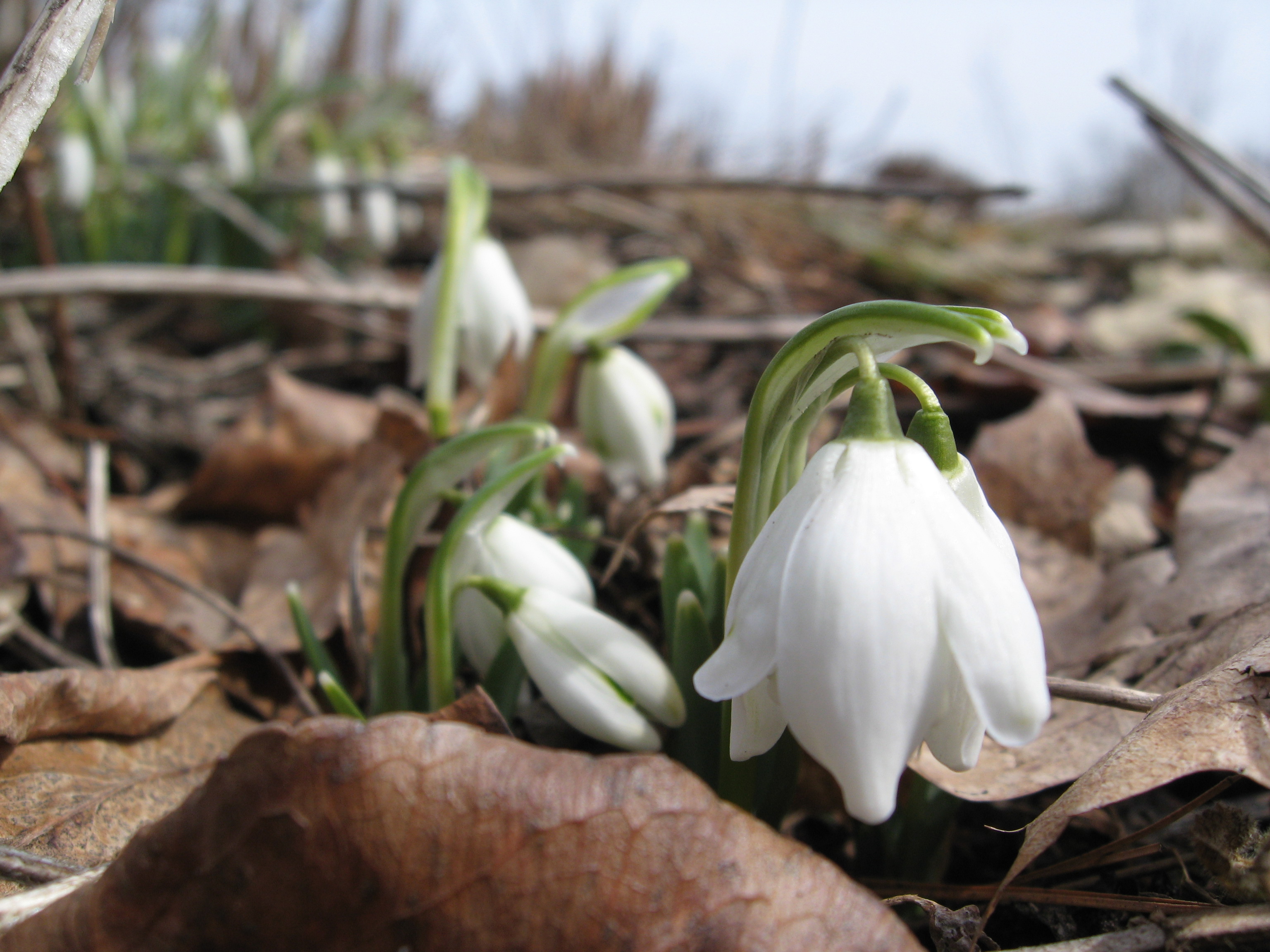
Snowdrops, Landis Arboretum.

Snowdrops, Landis Arboretum.

To Plan a Garden, And a Life

Finger Lakes vineyard, with Seneca Lake steaming on a 5 degree below zero morning.

Finger Lakes vineyard, with Seneca Lake steaming on a 5 degree below zero morning.

It flew in through my postal slot this week, a stiff green mailer I’ve received twice before: Continuing Gardener Sign-ups. It means that in February, I’ll toddle down to the public library, pay my small fee, re-read the rules, and confirm my plot.  Ok, so I knew the mailer was coming since I am a Garden Coordinator, but it’s satisfying to jot the date on the calendar anyway, marking the beginning of my fourth growing season with the Capital District Community Gardens.

We are in the midst of deep winter here in upstate New York; when it is absolutely necessary to wear gloves the minute you step out of doors or else risk wind-burned and skin-split fingers; when billowing road salt coats our cars and our street and our pants when we lean over those cars, even flies into our mouths if we are thoughtless enough to open them before tossing ourselves shivering back into our homes.

The standard picture of Gardener Dreaming About Spring is someone escaping that salty, snowy weather, cardigan-wrapped and hugged by an overstuffed recliner. The silhouetted figure, plush-slippered, pores over seed catalogs by a roaring fire, sipping hot chocolate or spiked cider as the wind screams outdoors.

I’m not exactly like that. Don’t own a recliner, fireplace, or seed catalogs, and slippers make my feet sweat. I clomp around the apartment in old socks and clogs and mostly I’ve used the seeds that are donated to the Community Gardens office or buy plants when the mood strikes me or they are on sale during the growing season.

However, this year I’ve been thinking hard about my planting choices. For example,  cherry tomatoes dominated my rows in the past–round red, little snips of yellow, some shaped like mini-butternut squash. I kept them because they volunteered from the first summer my garden was planted for me while I was recovering from surgery.

Now I think I want plum tomatoes instead.

The carrots were such a roaring success last summer, those tasty sweet morsels; if started early enough, multiple harvests would be possible.

I desire green beans, but don’t want to mess with the strings. Maybe I’ll grow lacinato kale along with my rainbow chard. And broccoli-one of my fellow gardeners shared broccoli with me, I could do that! I love broccoli. Perhaps I’ll plant the whole damn plot in flowers to cut for my dining table–then again, zucchini are not only traditional but useful.

I am practicing making choices, not just doing what I did before, not doing what is merely expected.

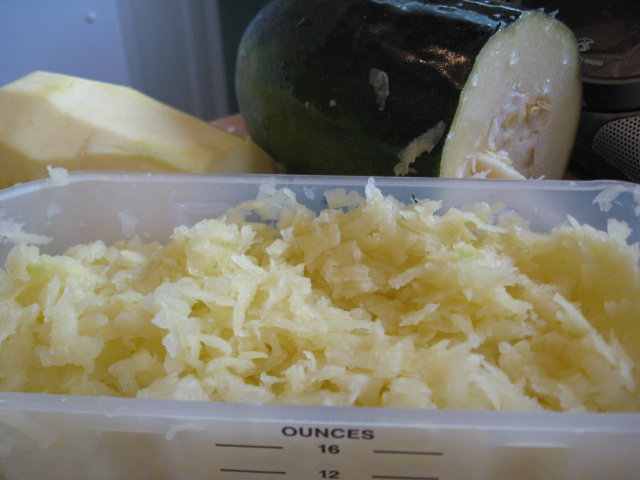
Last summer's zucchini shredded...

Last summer’s zucchini shredded…

...to make chocolate zucchini cake!

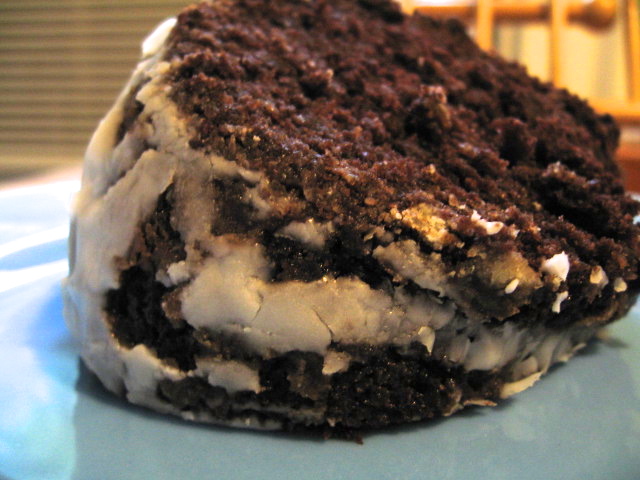
…to make chocolate zucchini cake!

Another envelope arrived this week, not through the mail slot but in my email queue (the way of so much these days), announcing my acceptance to a yoga teacher training program. Another spring planting to look forward to, drowse with by the metaphorical fire–though a more active drowsing, as my challenge now is not only to plan but to become physically stronger and more disciplined in my yoga, before I arrive mid-April. I also must battle my demons of self-doubt, in order for the A+ student to go back to school in a new and different way.

Like the garden, what do I plant?  What do I discard because it doesn’t work for me? How can I be publicly not-perfect, in a setting (learning) where I was so driven before? The plan: to be relaxed like I am about my garden plot: not the best and not neglectful, something in-between.

I’m going in as probably the worst student in Sanskrit names for poses, as well as a mediocre memorizer of everything else, with a life-battered body that hasn’t been doing yoga for very long. But my true subject matter will be one of the themes of Kripalu yoga: compassion. I will learn compassion toward myself.

When I am “not successful” at a particular physical or mental task, I will attempt to be successful at compassion for myself, and gentle even in discovering my lack of compassion. This I can do, and it is all I need to bring.

I vow to break out of my old gardener habits and make new ones, different ones, not sure what the harvest will be, but trusting it will be–something–something wonderful. Storms will come, and drought, and interruptions by the personal and political and societal–and the skills I’ve acquired in the garden will get me through what I’m calling “sleep-away camp” at Kripalu.

Here at the end of January I open the seed catalog of my life, once again dreaming the future into being.

Seneca Lake warmed by the sun, readying for the end of winter, and then spring!

Seneca Lake warmed by the sun, readying for the rest of winter, and then spring! Who knows what transformed things will come out of this ground?

Choosing Beauty in the Every-day: New Dishes

My first plate, resting on the Frank Lloyd Wright inspired placemats.

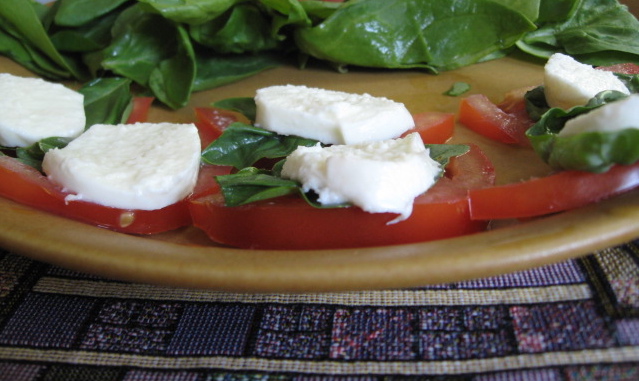
My first plate purchased in July, resting on the Frank Lloyd Wright inspired placemats: spinach fronted by fresh mozzarella, tomato, and garden basil.

Last week I bought the (almost) final dish in my new set of Bennington Pottery.

That’s important because three years ago, I found myself suddenly a one-person living unit, every room of the new apartment stacked with bins and cardboard boxes six feet high. I was Keeper of The Household as I had always been, but now with a much smaller Household to manage.  It was simultaneously frightening, sad, and a relief.

The containers spilled over with stuff saved for other people, for future needs and/or disaster: financial papers, cooking equipment, furniture, clothing, decoration–and dishes. Most of it had been purchased already-used decades ago, found on the street, or gratefully acquired as other people cleared out their basements and storerooms. The items didn’t necessarily match or work optimally, but they functioned, and when you are just barely surviving, that’s what matters.

Happy to have a very different life now,  I’ve been learning to go beyond the idea of just-surviving, especially since–as witnessed by the stockpiles of food I’ve been using up–I am releasing myself from the burden of so many belongings, the weight of saving in order to feel safe.

In addition, in the small amounts I keep, I want not only functionality but also beauty.  When my best friend was making a pittance on the front lines in human services, she would still buy a little piece of handblown glass or earrings, telling me:  Beauty is as important as food. 

Since Bennington Pottery is not only beautiful but relatively expensive, I’ve been acquiring the matte finish Elements design over time, buying most of them as “seconds” from the outlet or Potter’s Yard in Vermont (making me much more comfortable with the idea that I might break a piece here or there).  I certainly don’t need all of the sizes, just the couple that work for me ; I chortle over picking four different colors to mix and match, the option to make my table look different at every meal. The quirks in curvature and mis-splotches of color, part of being a not-quite-perfect dish, endear each salad plate and soup bowl to me.

Ham and lentil soup, toast with cherry preserves, in and on the new dishes

Ham and lentil soup, toast with cherry preserves, in and on the new dishes

During the factory tour on a slow day, one of the fewer-than-ten potters took visitors behind the scenes to see how they smooth and glaze and fire the clay.  To meet the artist-makers of my belongings moves me, and I often relive those discussions when I encounter the objects in my home.

Behind the futon on which I sometimes sit while eating out of my new palm-sized bowls, hangs a yellow-and-red Amish quilt, signed on the back by a northern Kentucky woman named Ella Bontrager.  As I study its shifting geometry, the rainy April afternoon of its purchase returns: talking in Ella’s little farm-shop, hearing how her husband and daughter work with her, why she used a nontraditional “proud” color in this artwork, what is valuable to her and her community.

A corner of Ella Bontrager's Amish quilt

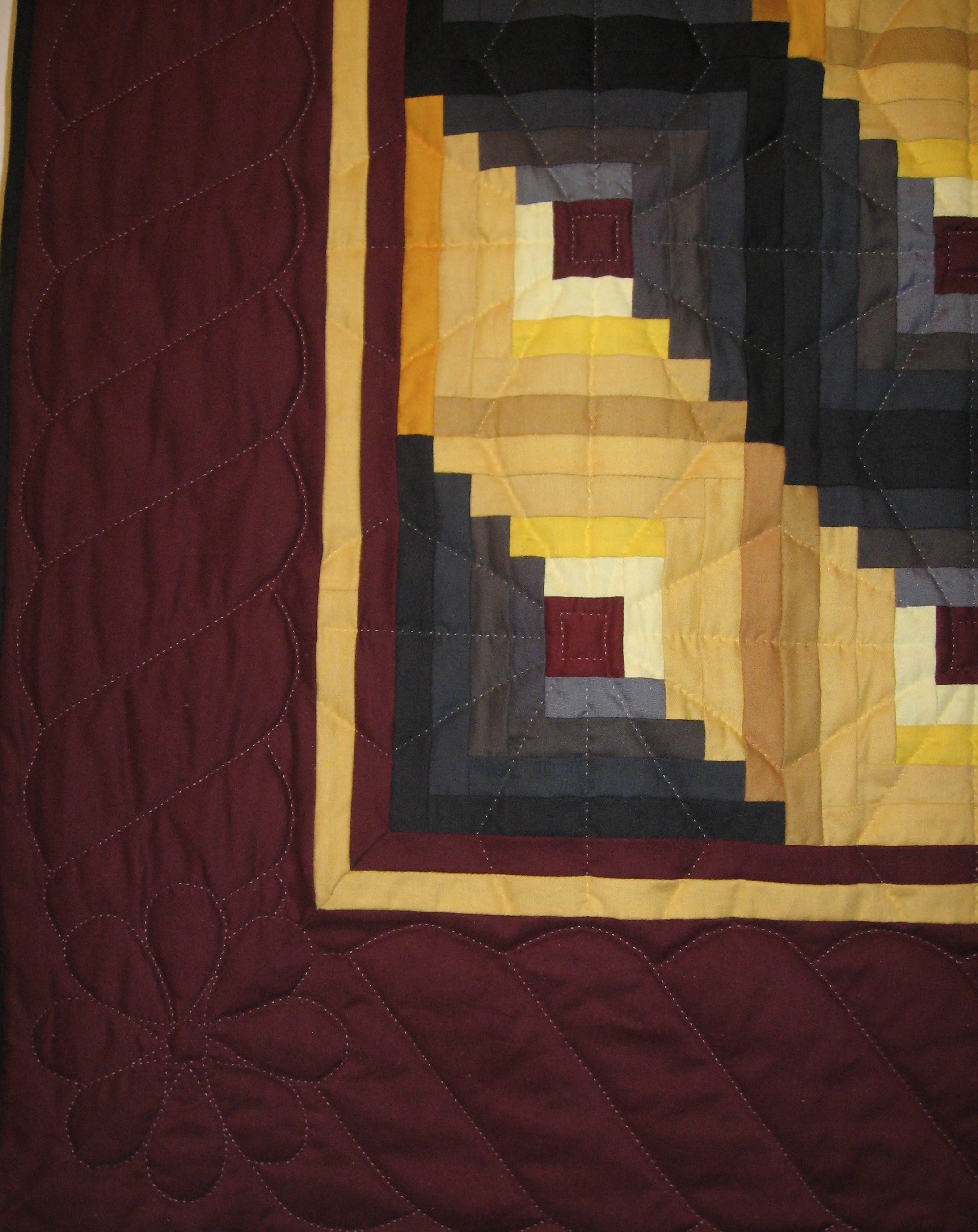
A corner of Ella Bontrager’s Amish quilt

My gaze moves to the purple and green and brown placemats I splurged on at Frank Lloyd Wright’s Darwin-Martin house in Buffalo.  The nuance in their colors and patterns frequently draw me to thoughts of architecture, simplicity and beauty–same as the quilt and the plates.

In the window, light glows through two tiny hobnail glass vases.  From over three dozen of varying sizes, I have kept only a few; the rest were donated, moving on to other people’s homes for their flowers and their meditations. The mis-matched plates and bowls from my past left in that give-away box, too.

Every day we eat off dishes and placemats, look at interior walls and surfaces, use the items we share our living space with.  How do we make this inside life beautiful?  What choices do we make, what do we get rid of, to add beauty to our lives?

Moments of startling light.

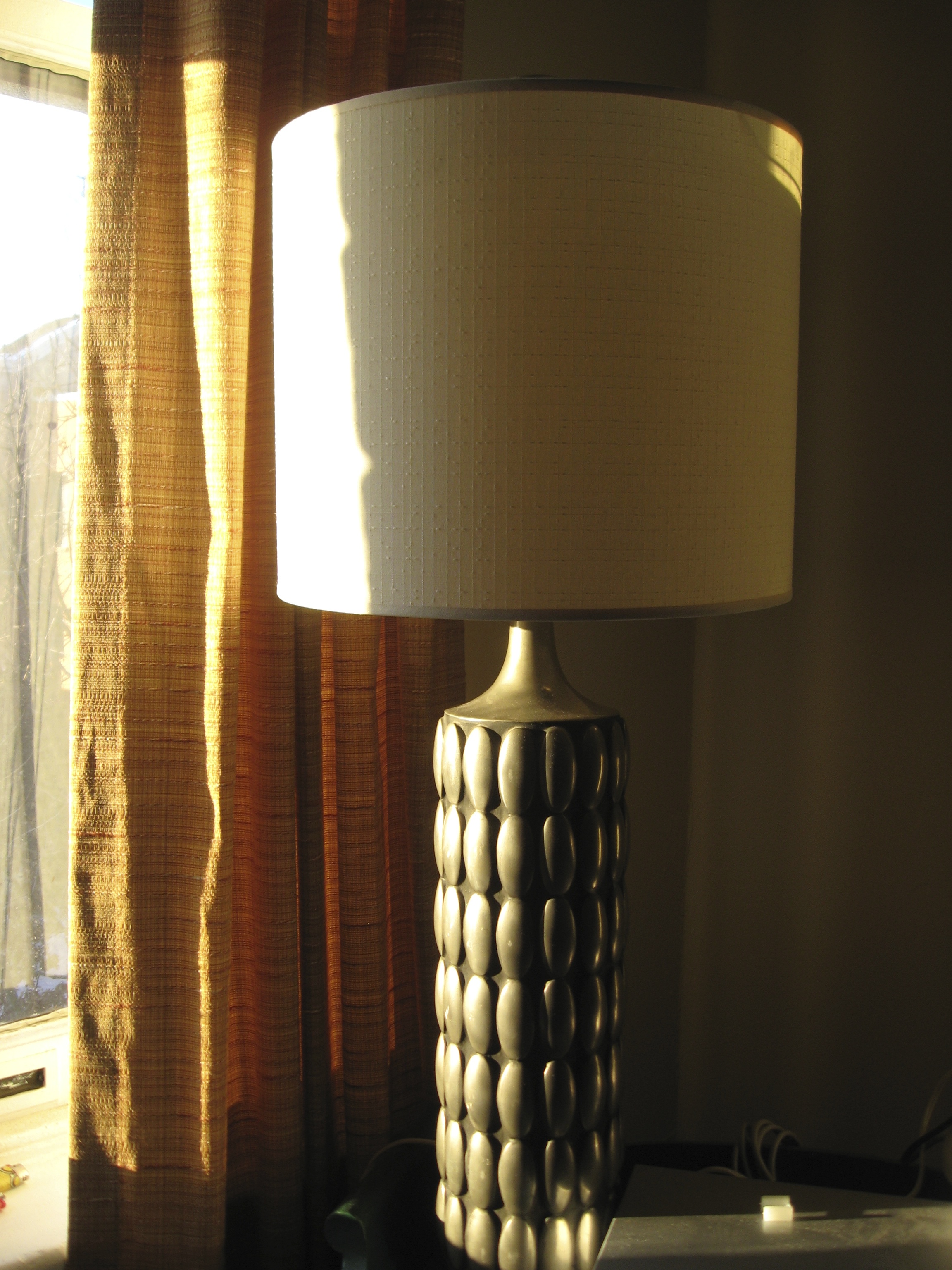
A moment of warm afternoon light.

Mind-Out-Of-Time: Writing, and Teapots

My teapot from J, tucked behind an electric kettle, another teapot, and a locally crafted mug,  on my early morning countertop.

I miss talking to J about my writing life.

This afternoon I will concentrate on writing, I’d say.  I’m deliberately ‘concentrating on,’ not ‘working on’–no more of the furrowed brow that ‘work on’ entails.

She’d laugh.  I used to have that furrowed brow, too; hell, look at my wrinkly forehead.  J would talk about the struggle to get to her drawing, even with new chalks and paints around her, how daily chores and her own busy mind pulled her away from something she’d never had time for, yet couldn’t quite get to, even now.  She’d encourage me to keep going, and I’d tell her more.

When I give myself over to writing, or create space for it, then I can relax and play. It’s what I call Mind-Out-Of-Time, what I sometimes think heaven is or would be: you are so involved in something that clock hands move unnoticed, you look up and the afternoon light is bending across your desk and you gasp–how long have I been here?

Mind-Out-Of-Time comes also when I choose to immerse myself in how life looks and feels, tastes, sounds and smells. It comes when I give myself permission to be right where I am, at that very moment, open to pleasure even in the midst of pain.

So I think of J, steeping tea in her beautiful cobalt blue teapot, when I came to visit six months ago. Napkins in hand, she danced oxygen tubing between pieces of furniture as I carried the prepared cups and cookies to the front room. We laughed about how, on our last big trip, she’d pulled her portable oxygenator, nicknamed ‘Fred’ after her father, all over the up-and-down hills of downtown Vancouver.  Fred sure got a workout, didn’t he? Took care of me just like Dad did.  We discussed once again her wish to die at home.  She asked after my teapot, a twin of hers, which she gave me when I moved away. Every time I make tea in it I think of you, I told her.

Two weeks ago, her caregivers still made English Breakfast in her blue teapot; she rested in the home hospital bed, I held the mug, she sipped sweet lukewarm liquid with a straw.  During the moments she was awake, she rolled her eyes sardonically, joking with only a few words about the little yellow curlers in her hair that looked like baby corn; I teased her back about how she finally got us all to wait on her hand and foot, and more seriously, how much we loved doing it.  As she drifted into medicated rest, she murmured about death, it will be pleasant; it will be pleasant. See you on the other side.

After the memorial service last weekend, I wrapped up the cobalt blue teapot in crinkly paper, to deliver it safely to her chaplain, someone who’d shared tea with her every Wednesday for many years, someone whom I suspect also understood mind-out-of-time with her.  I took one of her mugs and packaged one for yet another friend.

This morning, kitchen lights reflect on the curve of my round teapot as rain drips down the apartment windows.  Cars splash black puddles up into the air outside.  J’s goldenrod colored, cartoon-cat covered mug, full of toffee-chocolate-hazelnut tea, sits beside my keyboard.

Guess what.  I’m still talking to J about my writing life.