The Ending of Tulips–and the Beginning

This is where I need to be right now, not perfect and remarked upon- instead of Oh my isn’t SHE marvelous!, but blown open, curled back, the wind on me, the rain on me, feeling it all and not being afraid of it.

This is where I need to be right now, not perfect and remarked upon–not hearing Oh my isn’t SHE marvelously whole!; instead: blown open, curled back, the wind and rain on me, feeling everything full-on, letting the fear go.

I never saw the tulips this year–not in their full form, anyway.

My monthly book club rotates houses, and traditionally in spring one particular member hosts whose home and spectacular gardens overlook the Hudson River. Masses of sunset colored, black, and pink-with-white tulips usually quiver in the water-side breezes along with flowering Japanese plum, bleeding heart, and rhododendrons.

After discussion of racism and The Warmth of Other Suns; after mimosas, white asparagus, quiche, and lemon cake, I wandered outside.

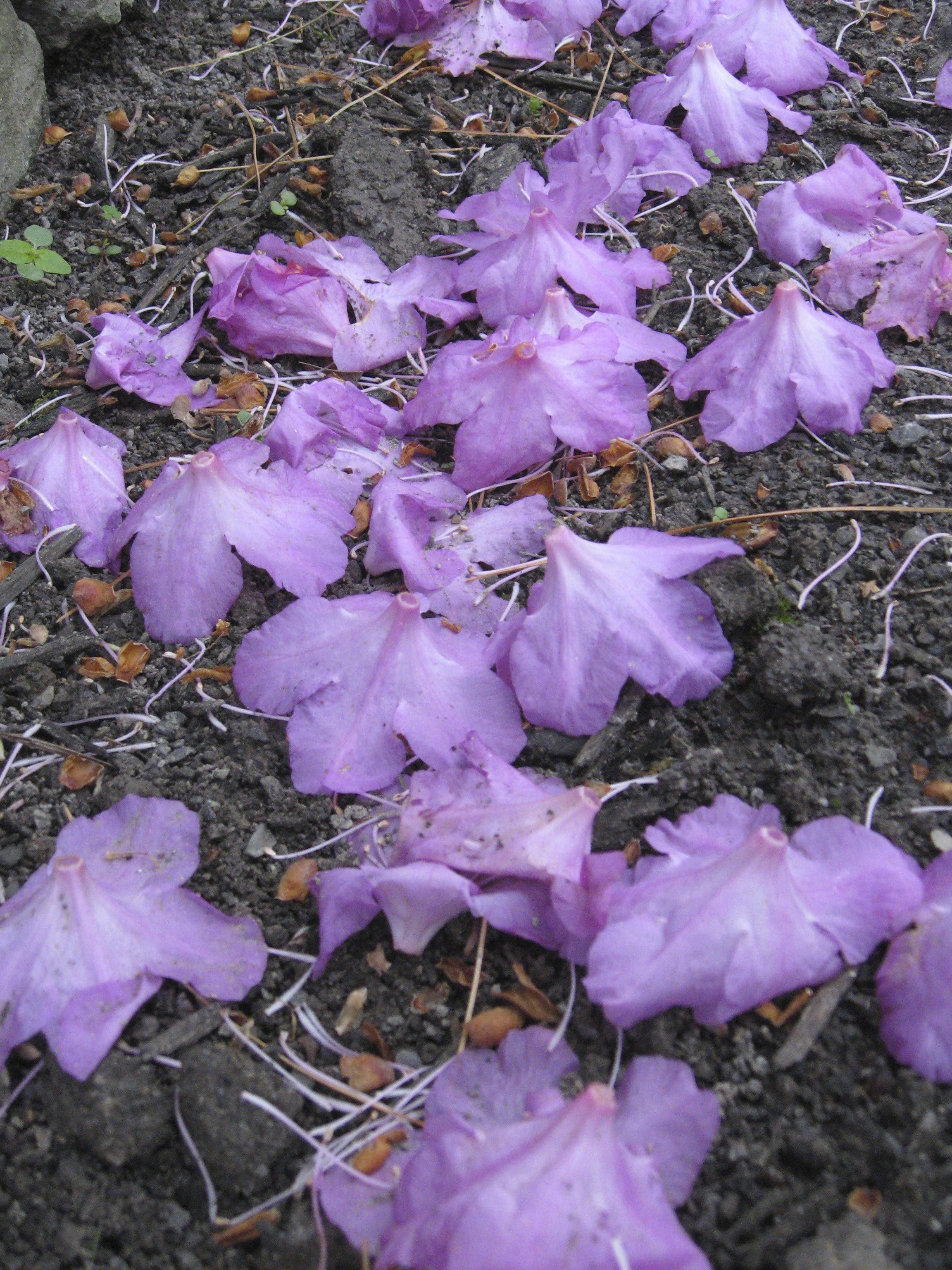
Rain splashed these purple rhododendron flowers to the gravel path. Upside down, they glow pretty on the ground.

Rain splashed these purple rhododendron flowers to the gravel path. Upside down, they glow pretty on the ground.

Though eyeful after eyeful of azaleas still sparkled in this Mother’s Day-morning rain, the tulips were finished.

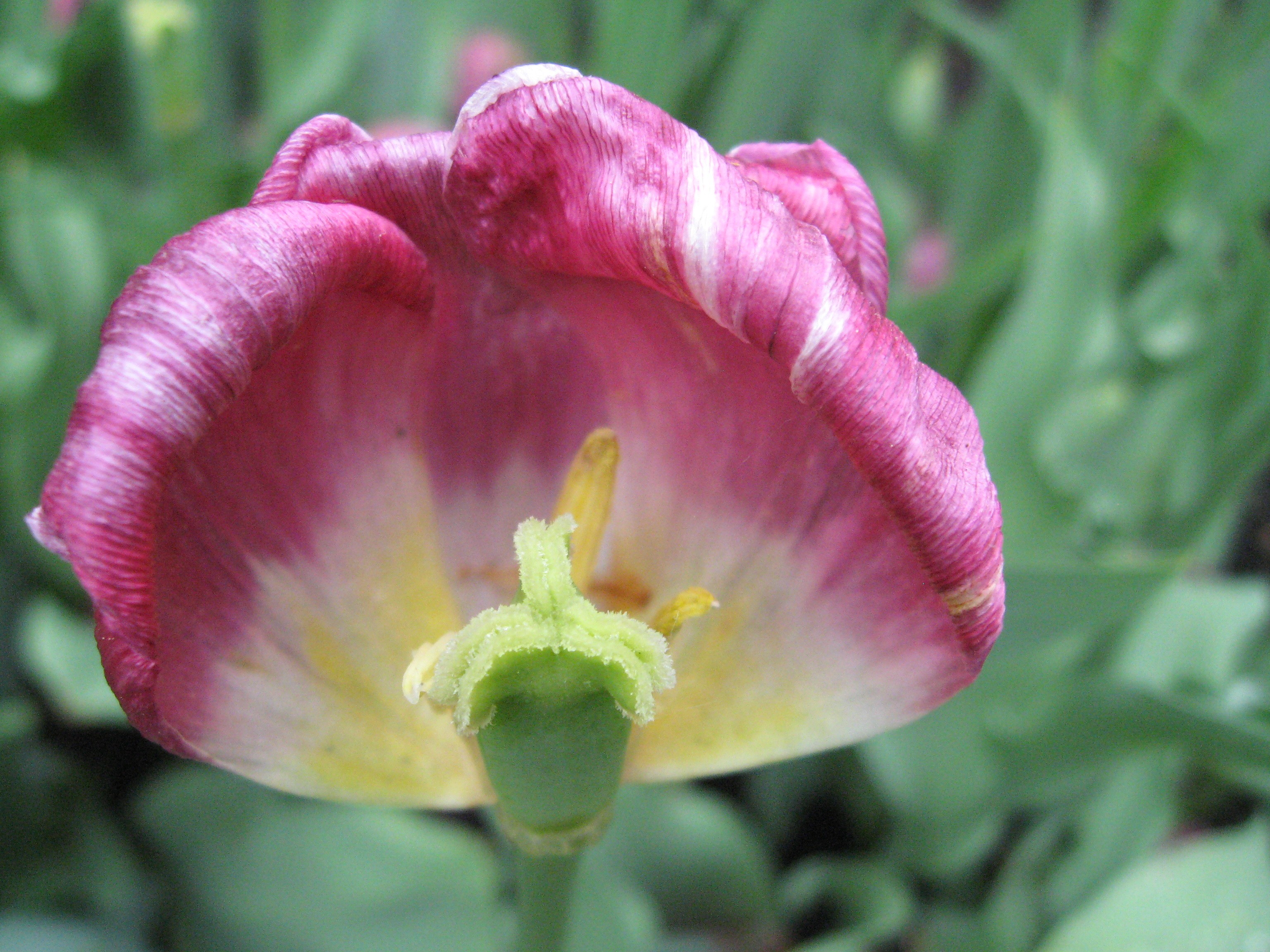
Something unexpected revealed itself in the decaying blooms.

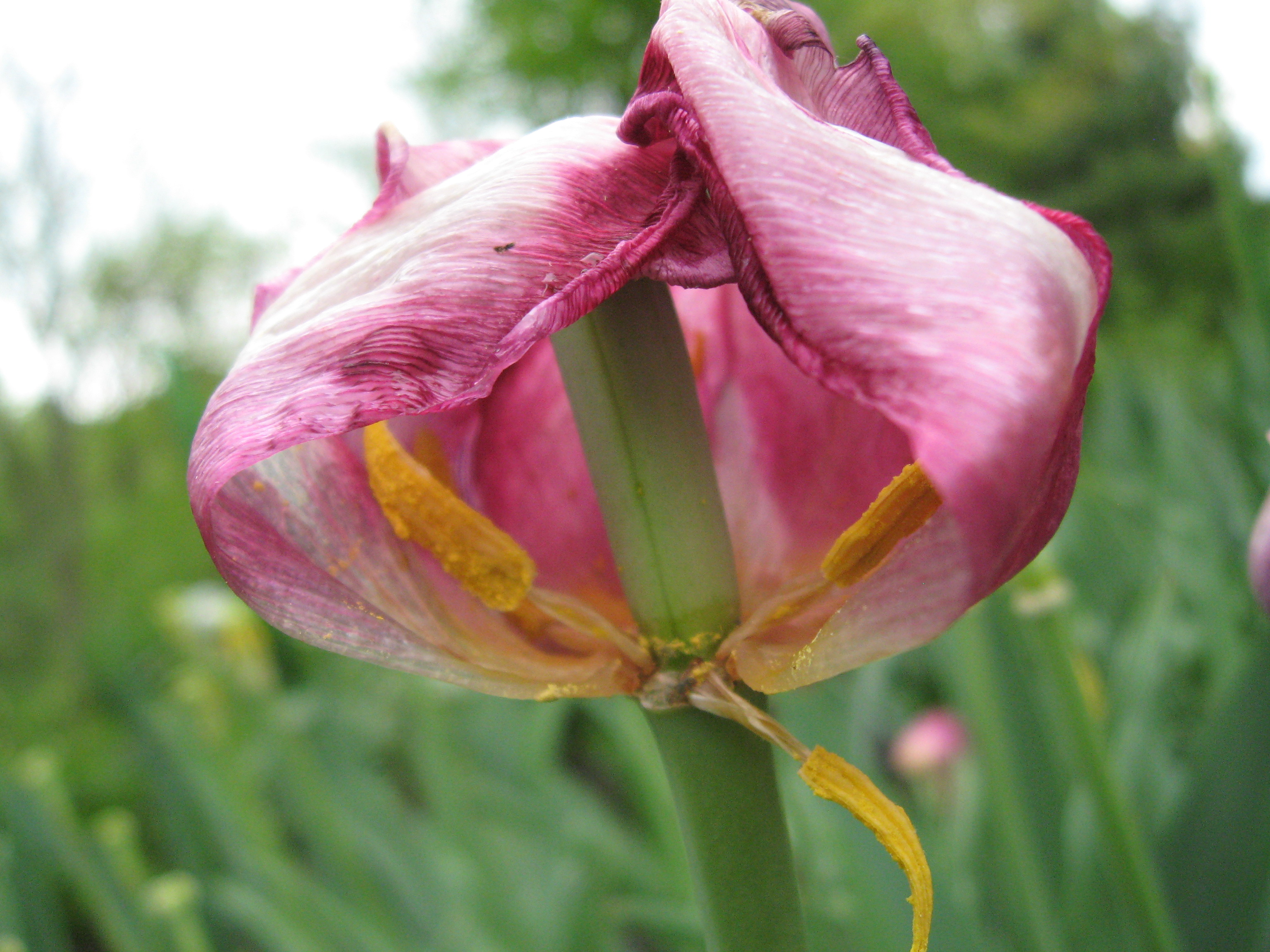
From shimmering swaths of bright colors, the tulips had individuated, dying back in distinctive ways: petals twisted here, leaves dropped there, a broken stem over yonder.

They were beautiful. They reminded me of–myself.

Exposed and fragile. Roots deeply set months before, underground, unobserved.

Dying in the present, shifting to new forms of being.

As no-longer-useful parts wither and fall, the hidden bulb is beginning to prepare for next season’s growth spurt.

discolored, browning areas showing inevitable desiccation, but even as they slump ground-ward, the petals flow twisted like a woman’s pashmina wrapping around her in a windstorm, sections resting in a different balance from the original.

Discolored, browning areas preview inevitable desiccation, but even as they slump ground-ward, the petals flow, twisted like a woman’s pashmina wrapping around her in a windstorm, petal sections balancing differently from the original cup-shape.

collapsing lopsided like a blimp or balloon, taking up more width, deflating and yet expanding, a large fabric sheet caught by the wind on one side, taking a bow. free to curl and twist now, as moisture escapes. is the color more or less intense?

Collapsing lopsided like a blimp or balloon, taking up more width, deflating and yet expanding. Free to curl and twirl now, as moisture escapes. Is the color more or less intense?

like a child hiding under a floppy hat, peek a boo with three anthers a-tumble

Like a child hiding under a floppy hat, peek a boo with three anthers a-tumble.

 the petals wilted into a swirling skirt, rolled frills made of the edges, the ANTHERS ON THEIR FILAMENTS resting on top of the skirt, if the bottom of the green  stalk-shaped style were a waist. Dance, movement, now rest.

The petals have wilted into a swirling skirt with rolled frilly edges. If the bottom of the green stalk-shaped style were a waist, the yellow anthers on their filaments are multiple arms in repose, between dances. Movement, now rest.

After five weeks recovering from and growing into the immensity of Part One, quietly studying and practice-teaching and building my skills, very soon I return for Yoga Teacher Training Part Two.

Exposed and fragile. Roots deeply set months before now, unobserved by most.

Dying in the present, shifting to new forms of being.

As no-longer-useful parts shrivel and fall away, my inner self begins to prepare for this next period of growth.

Yes.

the fully exposed center style with a yellow stigma topping it, with two perfectly formed black anthers hanging: the anthers resemble two useless paddle-hands, or two clown feet hanging.  Perfectly formed above the anthers, the pistil (the stigma and the style together) that now is bravely unprotected in the garden. /vulnerable/ uncovered/ exposed

The center style is topped by a pale yellow stigma, and two perfectly formed black anthers hang from withered filaments below. Vulnerable, and yet confidently humorous–if I may anthropomorphize a bit more–they resemble two paddle-hands, or clown feet hanging. What sly comment does this former-flower want to share about the next round of colored tulip-cups?

To Be A Student Again: Falling into the Pond, Repeatedly

Monk's Pond, Kripalu Center. Two possible paths in learning, and life: I could worry about stepping perfectly from one broken-down, submerged plank to another, or choose to play, expecting to fall in, enjoying all parts of the exploration of balance.

Monk’s Pond, Kripalu Center. Two possible paths in learning, and life: I could worry about stepping perfectly from one broken-down, submerged plank to another, or choose to play, expecting to fall in, enjoying the exploration of balance. Especially taking in the part I’m most scared of initially: getting wet.

April’s training at Kripalu once more flung me deep into non-ordinary time, like the months of grief around my friend J’s death*; with much to say afterwards, and yet so much unprocessed and unwritten-about.  I’m stymied in the richness of my adventures, and exhausted again, still.

Information, information, poured in for twelve days. From the senses: exotic dishes on the buffet, hiking to jade-green ponds and a blue mountain lake, new faces to learn, voices, expressions, chanting, body movements and stretches and muscles micro-damaged then self-repairing;  loosening of muscles and expectations.

From the emotions: old frustrations hidden in the back and neck, released!, even-older habits of perfectionism popping up and rejected repeatedly.

From the intellect: how to memorize? how to rework language? philosophy to examine and reject or accept, examples to wonder at and incorporate.

We fifty-some students were fed and watered on a regular schedule:  yoga now, eat now, learn now, more yoga now, eat now, learn more, sleep now. Sometimes I opted to sleep instead of eat, as the fifteen hour days wore on.  We studied (or not), absorbed information, wept, breathed in new ways, chattered, practiced asanas, laughed, walked the labyrinth, mused, closed our eyes a lot, danced, practiced teaching, meditated, listened to each other’s life stories.

More to come about the food--but here are the staples of broccoli and kale. I ate kale at every meal some days. Yum.

More to come about the food–but here are the staples of broccoli and kale. I ate kale at every meal some days. Including breakfast. Yum.

I’m groggy coming out of school, as evidenced by my writing:  incomplete phrases dangle, run-on sentences jackrabbit ahead.  Regular life assaults me while I self-challenge not to leap recklessly into the old hurry-hurry. Yet requirements push impatiently through the door as I bring my luggage in:  lists, schedules, topics internal and external: what for dinner? hmm, those piles of unfinished projects, cleaning; oh, and here come other people, can I handle interaction?

Another fact reverberates in this bumpy integration: I return to Kripalu in June for a second round, and preparation is required in the form of teaching practice, absorbing a three inch binder full of materials, memorizing Yamas and Niyamas (Character Building Inquiries of Restraints and Observances), becoming familiar with even more poses (seventeen asanas down, twenty-six more to cover in June).

And most important for me: the internal dialog shift.  Teaching is not giving a performance, it’s having an experience. Breathe and meditate first. Breathe and don’t take yourself so seriously. What do I experience in the moment of teaching? How can I flow with self-awareness along with students’ needs to understand? What about timing the various sections of the class, and whoops! I need to use a new kind of language–not the language of anatomical teaching from my former days in massage therapy but rather directive, guiding phrases to move the participants to internal sensations and lack-of-self-judgment–yes, language cleaner yet more poetic.

Months ago, coming back from Kripalu, I didn’t realize how painful it could be to re-enter regular life.**  So this time I moved back into the world deliberately and slowly.

I let other people take care of me a bit with:

–A zen motorcycle ride to Saratoga Spa State Park; moving meditation different from the yogic variety, world going by but not attached to it:  smells of cut grass, newly manured fields, flowering crabapples and Japanese plum, all cascading inside the helmet, forced up my nostrils; the call to give as little input as possible to the bike’s movement, merely shift with the driver’s body to stay upright or angle to make turns.  Then crunching along gravel, smelling the sulfur-y carbonic acid water when we pulled up to the springs, hearing toddlers in shorts giggle along the paths to the spouters.

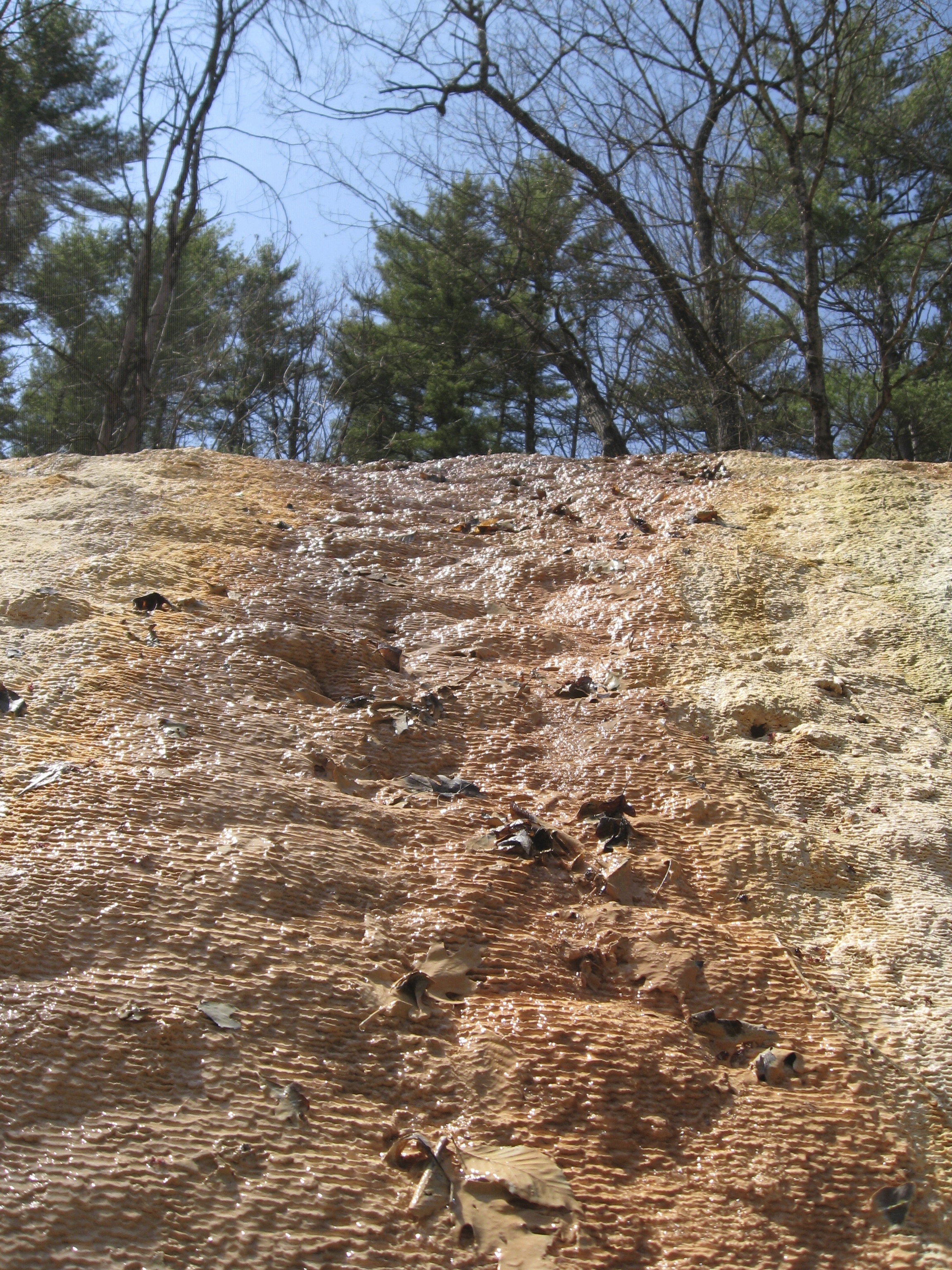
Saratoga Spa State Park, Saratoga Springs, NY. Mineral rich waters bubble out and down the rocks.

Saratoga Spa State Park, Saratoga Springs, NY. Mineral rich waters bubble out and down the rocks.

–An hour’s amble to Jumpin Jack’s hamburger shack on the first hot day of the season,  for a cheeseburger topped by coleslaw, finding a long but quick-moving line of post-baseball league families and tattooed Harley Davidson riders, everyone patient but happy-bouncy like little kids because of the warmth.  A measured amble afterwards to settle dinner on the way to Stewart’s for dark chocolate ice cream.

–Another day: the sun was golden at John Boyd Thacher Park where a bald eagle rode troughs of air over the escarpment, along with turkey vultures, red-tailed hawks, ravens circling–and then three rare Blue Karner butterflies indigo’d the path in front of my hiking companions and I.

Rare scarlet trillium, imperfectly framed AND glowing deliciously.

Rare scarlet trillium at Thacher Park, imperfectly framed and yet glowing deliciously from the sun behind.

–Talks on the phone caught me up with family and colleagues as I put in window screens  to catch the cooler night air, then re-stocked the fridge.

Finally I could bring myself to clean out the email queue, a hundred messages at a time (a task not yet complete), unpack the suitcases and put down the new green yoga mat.

And to the garden: Planting has begun in the actual garden plot, in addition to my life plan.***  An entire row of three varieties of carrots!, stringless pole beans, lacinato kale, peas, radishes, and this year sweet pansy-faces smile on the row ends, with bachelor button and cosmos seeds strewn in. The little girl and boy who live in the house next to my community garden begged for seeds when they saw the activity; we tossed a packet of zinnias over the fence.

Dug and double-dug, compost and mulch added in, planted, marked and covered with sphagnum peat, watered. Growing underground where we can't see it. growth occurring that we can't see yet.

Dug and double-dug, compost and mulch added in, planted, marked, rows covered with peat moss, thoroughly watered.  Growth, that we can’t see yet, already occurring.

These May mornings I rise at 5:30 just like at school, loop mala meditation beads around my wrist to remember my sangha (study community) and chant along with the grainy video I took of my instructors singing the Student-Teacher Mantra. I listen to my own body’s needs on the yoga mat, and study how to teach others, giving myself hours a day to learn.

Of course I overextend in studying, and other parts of my returned-to life. Then I remember the Niyama I am practicing of Ishvar-Pranidhana: softening and opening to the play of the universe. I kindly, gently and compassionately, rein myself back in.

April's full moon, called the Awakening Moon in some traditions, certainly appropriate for this period of learning for me.

April’s full moon, called The Awakening Moon in some traditions, over the lake at Kripalu. Awakening, indeed.

*See posts Sep 14 & 28, Oct 8 & 19, 2012; found in the category “Death and Grief”

**See “Confidence that I Know Nothing: The Labyrinth” posted November 2, 2012

***See “To Plant a Garden–And a Life” posted February 1, 2013

Sighing into spring, and school

Golden now, not grainy-gray, the quality and angle of morning light has definitely shifted in the kitchen. Come 5:30 a.m., I hear returning songbirds chipping and chirping outside my urban bedroom. It is spring again–and still–despite the almost-blinding gusts of snow that assaulted my windshield after dark the other night.

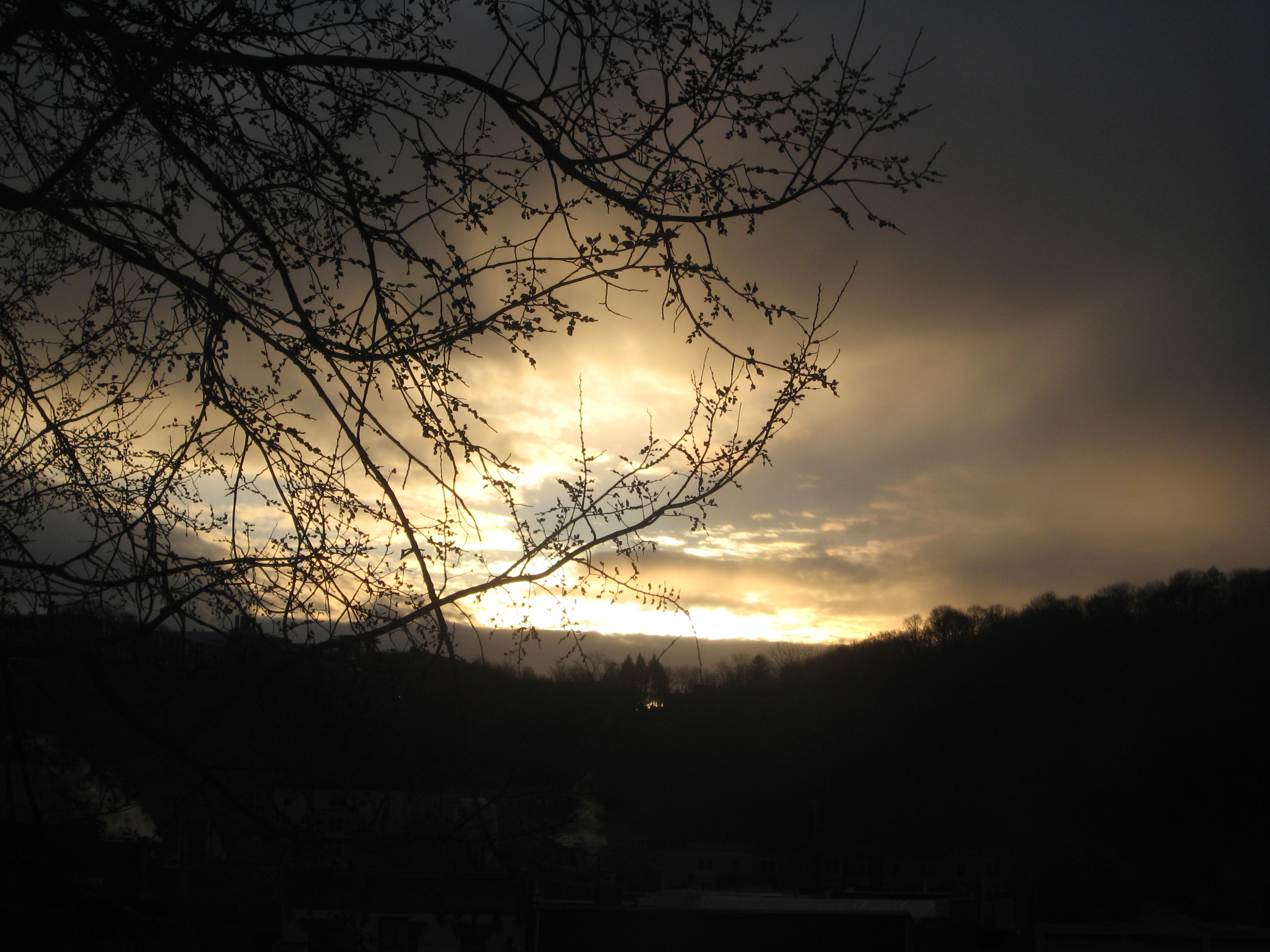
Winter sunrise over the hill

Winter sunrise over the hill

I think about going back to school and sigh, just a little. This will be a challenge. Normally spring is the time students think about freedom! if not the short burst of spring break, then the long open opportunities of summer. Instead, I am picking up books, “screwing on my thinking cap,” as some obnoxious teacher once pantomimed. Ouch.

I am also intrigued, excited, curious. It’s like sleep-away camp–not that I ever attended, just read descriptions in books and heard about it from friends. Supposed to be new kids to meet, a whole lake to swim in, lanyards to twist and knit. In my case, other interesting grownups, a lake to walk around (still too cold for swimming), forest paths and a labyrinth too and a healthy cafeteria: physical and mental growth to be had everywhere.

My problem is that very persistent A+ student who hangs on the edge of my mind, like a bully taunting from the field beyond the playground, Yeah, just try stepping over here. You’ll see what happens! Loser!

She/he interjects comments as I read my Kripalu Yoga textbook. Sometimes I am pulled in by the resonating philosophy, so I forget that voice; sometimes I sigh yet again, frustrated by my more recent midlife difficulties with memorization. Perhaps because I am creating new neural pathways along with the information, undoing old patterns of self-deprecating reaction, my mind has rebelled: This is too hard! I’m not cooperating!

I go into the yoga room and look at the book, the diagrams. Deep breath. I speak the pose names as I stretch out and position myself–

–on the belly, pelvis firmly anchored into the earth, arms and legs lifting up and behind me: I whisper “Nav-asana,” and think Naval, like a boat on the water, floating with waves of breath….

Kneeling, then flowing back over knees-wide-apart, arms reaching forward on the floor, Garbh-asana, Child’s Pose–I am garbed in the freedom and openness of the child-mind and child-body, I take what rest I need, when I need it.

Bala-kik-asana, Crane: a one-legged pose of balance, arms hovering, the staccato Ks remind me of the stick-legs of a bird in water.

Like a boat--or a dock--water softly lapping, the feel of Navasana

Like a boat, or a dock:  water softly lapping, the feel of Navasana

Ah, there, that’s a reason you do yoga. Space for creativity, not pushing and grunting along, not cramming yourself into a place that doesn’t fit. By its very definition, yoga is about expansiveness, room for yourself, who you are, at that moment.

Unwinding my body in Spinal Twist (Matsyendr-asanahow to remember THAT one?) I exhale and think: Snow flies yet spring comes. I can’t remember things, I can remember things.  Just because I suffered last time I learned, doesn’t mean I have to again. In fact, the intention is to do it differently now.

Welcoming carving on the Emma Willard School  "Alumnae Chapel"

Welcoming carved face on the Emma Willard School “Alumnae Chapel”

I enjoyed a marvelous Easter/post-Spring Equinox holiday with a colleague of mine. We tromped through cemeteries overlooking the Poestenkill and around the Emma Willard School campus, deserted on a Sunday; snacked on huge pink slices of watermelon radish with cups of hot tea and maple sugar; worked on individual writing projects while the local whole chicken stuffed with crumbled sausage, butternut squash and kale baked in her oven.

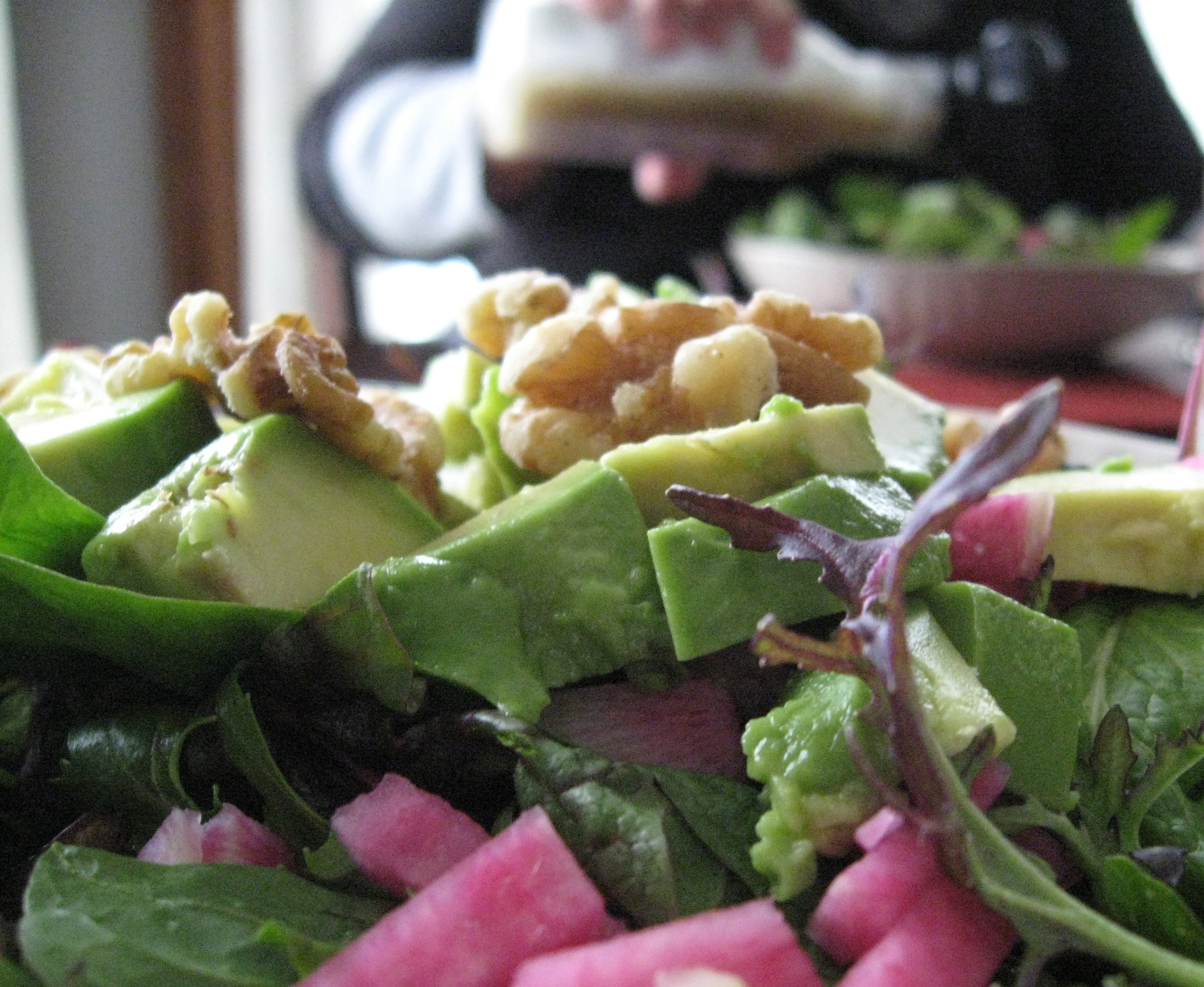
We took a first-course interlude of salad: more radish, avocado, walnut, mesclun and vinaigrette.

Spring salad to tease the appetite

Spring salad to tease the appetite

I sliced sweet potatoes into fries. Her least favorite chore for the day, the knife-work was a job that didn’t feel like drudgery to me at all; I hummed as I chopped along.  That’s something I am watching for in my future earning-a-living, ways of spending my hours that I so enjoy they don’t feel like “work.”

My companion rubbed coconut oil, cinnamon and a little rosemary on the wedges before oven-roasting them. As we tapped our keyboards in the living room, the smells of dinner intermittently tickled our noses and then slammed us lusciously when we re-entered the kitchen in search of more tea.

When all was ready, we ate until satisfied and no more, heaving happy groans nonetheless, and deliberately leaving some food on the plate to wrap up for later.  Sips of tart cherry juice with seltzer served as dessert, accompanied by more writing time.

Paleo stuffing and sweet potato fries

Paleo stuffing and sweet potato fries

Ahhh, we sighed, a holiday that wasn’t (as is typical) about overstuffing our stomachs or our schedule. As the day meandered, so did we; we took seriously our choices but made them only as we went along–Want to walk more? Turn this way or that? Whoops, the chicken isn’t done; oh, I see why it needs more time, ok, we’ll write for twenty more minutes.

She’s a future yoga teacher too, and we’re both applying the lessons on the mat to daily life: sometimes grappling, sometimes serene, knowing serene-plus-grappling is actually desirable.

Yes, I told her, I joke a lot about breaking into a sweat learning to love my life.

But ease is what I aspire to:  ease within challenges, like strength and lightness in a yoga pose, grounded in the earth and yet buoyant, willing to move and respond to the wind, and not let go of connection to who I am in my core.

False starts, shifts in weather, don’t indicate that spring won’t come. How days-off were acknowledged in the past doesn’t define how I celebrate them now.   I will allow myself to be not-so-good in school and not worry.

All of it will be delicious.  Especially the more I stand in each moment, Right Now, swaying and trembling perhaps, but over and over returning to curiosity, determination tempered with compassion, and gentleness toward myself.

Warm spring sunrise

Warm spring sunrise behind budding tree

The Value of Small Things

A droplet frozen as it traveled down the branch tip, bubbles of air and all.

Melting snow refrozen to droplet as it traveled down the branch tip–bubbles of air and all.

Exhausted in my illness, I half-dreamed–swirling textures, miniature scenes:  small things.

I woke at strange hours, blinking in the semi-dark, and dragged myself into consciousness. A few times I flipped on the computer and reviewed my personal visual library of the outdoors.

Photographically, it must be admitted, I often fail to capture The Big Scene. Views to the horizon should encompass not just a grand vista but also multiple items of interest–framing trees, layers of color, initially unnoticed figures–which the eye can move between while simultaneously absorbing the grandness. I usually hazard an attempt or two at digital reproduction, while shrugging at the results.

But when it comes to the diminutive, somehow the camera’s lens recreates what I see, and then some.  These photos lull me out of what otherwise would be a fast hike through the Big Scene of tree-tree-tree, sky and green, sky and brown, up the icy path, down the slippery path, tree-tree-tree.

Lichens galore at Dyken Pond; they loved the damp and cool of December there.

Lichens galore at Dyken Pond; they loved the damp and cool of December there.

Concentrating on the little buds or branches trains me to not just look at what is on the trail ahead–the overall effect–but also the detail that goes into the effect, or surprises hidden within the effect.

More shapes reminiscent of Dr. Seuss: a vehicle, a hairstyle, something from down in Who-ville?

More shapes reminiscent of Dr. Seuss: a vehicle, a hairstyle, something from down in Who-ville?

Flashes of my hiking partner’s cadmium red coat pop up on the computer screen–she and I openly acknowledge that pulling out a camera also acts as an excuse to catch our breath. Look at the little fern! Pant, pant. Oh no, I’m fine, just taking some photos. Wink, wink.

Sometimes I don’t realize I’m tired or in need of a snack of apple-and-cheese or Carrot-Nut Bread until I am enthralled by a leaf’s angle or juxtaposition of shapes in the lichens. Visions of the teensy help me to stop and take care of myself.

No wonder while I was sick I dreamed of the small.

Hints of pussywillows to come, Landis Arboretum, Esperance NY.

Hints of pussywillows to come, in the winter sun of Landis Arboretum, Esperance NY.

like a moth emerging under crystals, velvety/downy leaves like bat ears pressing snow between them, and more leaves unfurling, uncurling, not quite identifiable. Out of a hard stem, hardly able to see that it could create a delicate quivering leaflet

Velvety beech leaves like bat ears or a moth emerge under crystalline snow, Dyken Pond.

In yoga, we do adjustments called “micro-movements”, that make a pose our own, responding to the muscles’ and joints’ needs at the very moment we are holding the body in the defined way that creates the asana. We are in the pose and we are adjusting the pose, all at once–simultaneously ancient/universal and modern/mine.

As part of the adjustments, I am learning to giggle once in a while when I become too serious–How silly to think perfection is required or desired!; to note then let go of worry about the loudness of a knee pop, to feel relief at relaxing a jaw that, unbeknownst to me, became clenched. Micro-movements are responses to the small that call from inside the body, in order to properly choreograph the Big Scene, the vista of Warrior Two or Mountain Pose.

Perhaps my larger views will improve, eventually.

Early crocuses, Landis Arboretum.

Early crocuses, Landis Arboretum.

I saw my first crocus cups of gold this week, two days before the Spring Equinox and one day before a huge snowstorm.

Two seconds after the crocuses, snowdrops. Those squiggles of green, puffs of white, baby plants so clearly claiming their place in the world, popped up out of the snow and mud.

It’s the rhythm of the natural world that’s always there–the natural world that we separate ourselves from too easily, and the rhythm of growth and seasons working like breath; we forget they all continue twenty-four hours a day: in, out, in, out, winter, spring, summer, fall.

What did I take from my middle of the night studies? Exquisite tiny worlds can be seen, if I look. Micro-movements, the small responses in my body, teach me to own my yoga.  And I would do well to practice “micro-movements” in other parts of my life.

Back in the yoga room, the intake and exhale wash away distractions. Small expands to huge. Grains of snow outside the window glisten me into the Now.

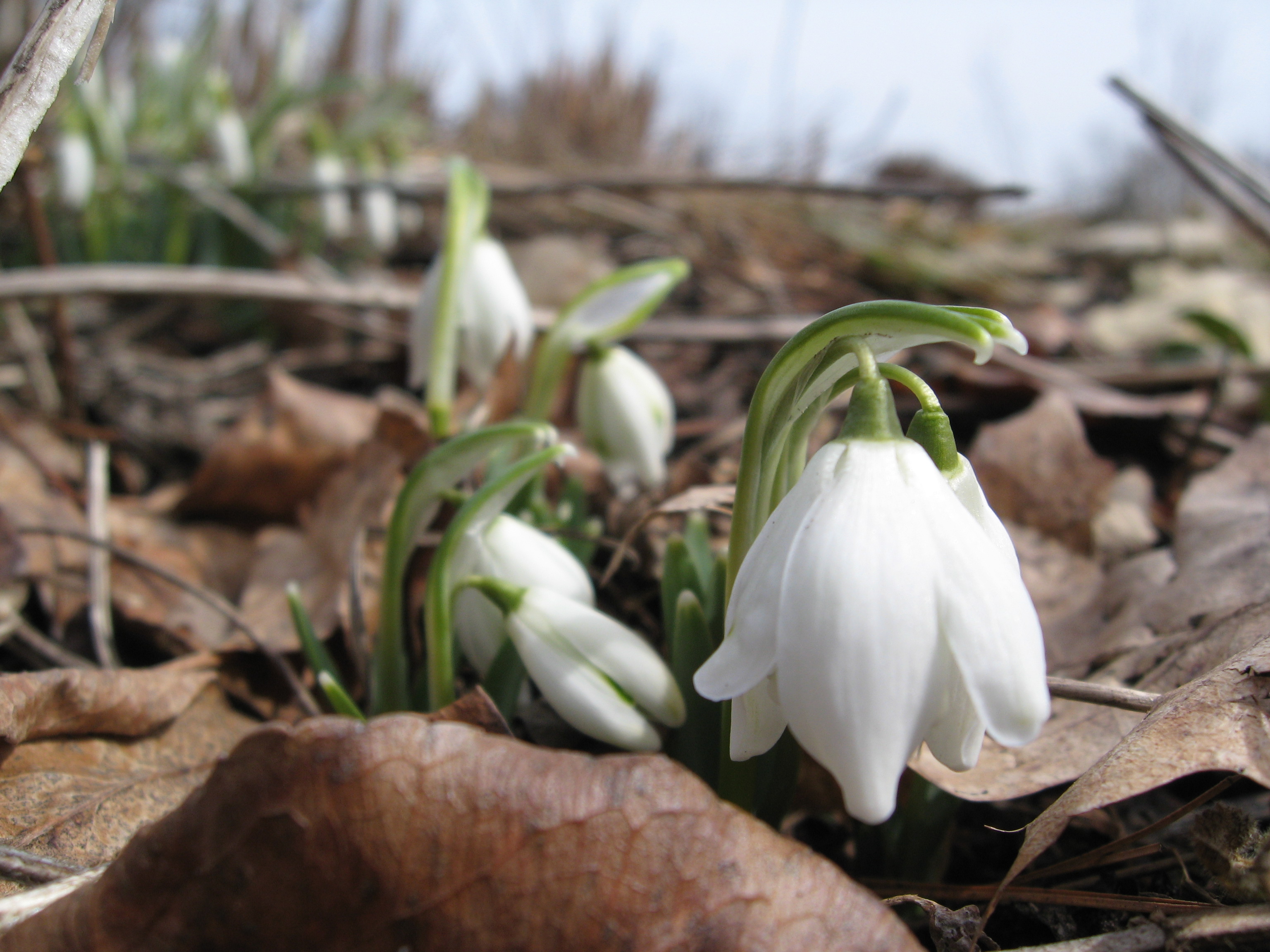
Snowdrops, Landis Arboretum.

Snowdrops, Landis Arboretum.

Carrot-Nut Bread in the Woods: Yoga and Intention

The Long Path, John Boyd Thacher Park

The Long Path, John Boyd Thacher Park

When I first committed to creating a personal daily yoga practice, I quickly became frustrated.  I want to do the asanas and breathing, but it seems so overwhelming to go into the room and practice for an hour every single day–even though I know it feels good, I am very happy at the end, and I WANT to do it.  

“Life” kept getting in the way. My mind and body fought me.

Luckily a friend who’s been doing yoga many more years than I suggested:
Every day, just stand at the yoga room door and bow. If you are capable of additional effort, go in and do thirty seconds on the mat. Once in the space, if you feel drawn further, then follow that inclination.

It worked. Some days I bowed at the door, physically acknowledging the desire and the simultaneous inability or lack of time to do more than bow. Other days I went in and sat and breathed and moved, not paying attention to the clock, just following my body’s needs and desires. Now once in a while, I take the computer in and stream a class.

I am developing a practice, not a routine.

And I admit–I’ve still had a hard time overcoming that initial inertia; sometimes my disinclination to move wins the argument. Then I remind myself: you don’t need an argument, just set the expectation and do your best to fulfill it. Even if you just bow at the door.

Candles in the yoga room; snowy street outside.

Candles in the yoga room; snowy street outside.

So–I’ve been sick for several weeks with what is usually called “a nasty cold.” It has been especially disheartening since before I was felled by the virus, I’d just experienced a wonderful streak of physical strength building in anticipation of Yoga School–hikes and walks and weight lifting and yoga classes–which dribbled down to nothing as my sinuses did the opposite.

All the ongoing projects–writing of every kind along with the apartment clearing–lumbered to a stop, and are just now rumbling back to life.

Coughing hard while tucked under covers and unable to do anything physical, I comforted myself with memories of Carrot-Nut Bread in the Woods.

Snow storm on the Escarpment; Thacher Park.

Snow storm on the Escarpment; Thacher Park.

My hiking companion and I have been venturing to remote parts of well-known local nature areas; one week she brought sticky home-made baklava, which we ate in a snowstorm while peering over unguarded ledges of the Helderberg Escarpment. The next week I unpacked Carrot-Nut Bread (my absolute-favorite-quick-bread-on-the-planet) to munch along the sunny aqua-blazed Long Path.

To have such fancy food–What an indulgence! we giggled. We keep turning our human requirement for exercise into photo safari adventures and seasonal meditations, and now even our snacks have become more than just nutrition: they are flavorful, exotic even. And delightful!

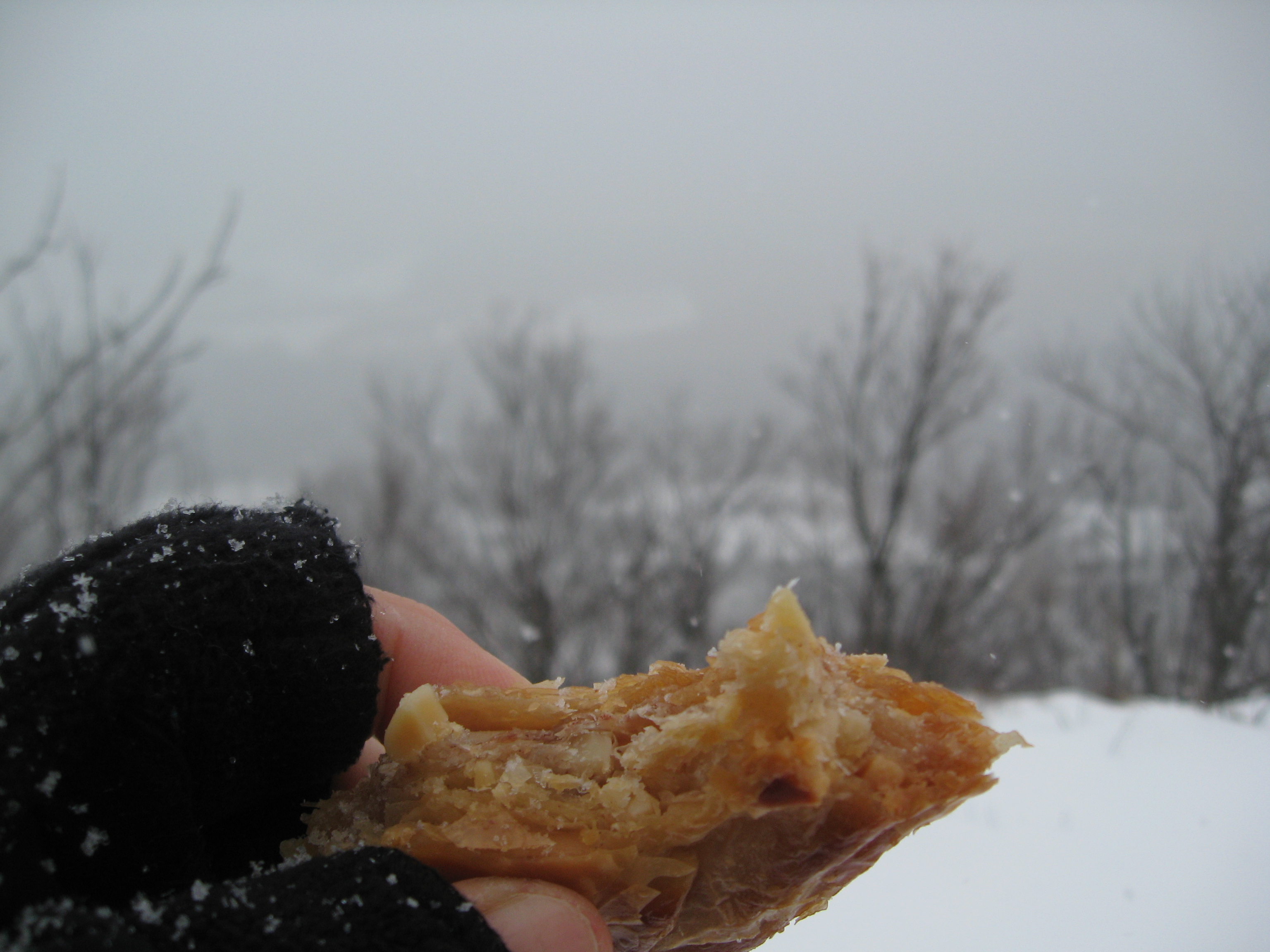
Baklava in the snow.

Baklava in the snowy wilderness.

The first day I could stir from my sickbed, I turned on the lights in the apartment, in case I felt like washing the loaf pan from the Carrot-Nut Bread or organizing papers.

Pretty soon I switched the lights off, but did stand at the yoga room door for a moment.

Then I heated some chicken soup and, dizzy, sat on the futon for a while before heading back to bed.

I had to trust that this illness-induced inertia would pass, even if it was difficult to imagine; that there would be experiences again that felt like Carrot-Nut Bread in the Woods, Baklava in the Wilderness. That I would eventually speak without hacking uncontrollably, get back to the yoga mat and the kitchen.

All the empty time in bed gave me time to realize: I intend to do these activities, intend to do them thoughtfully and gloriously, and then they will became part of my Life, not just another thing to add, or schedule into a routine.

And so it happened. Vinyasa class and gentle machine workouts in a colleague’s gym became realities. Buttermilk Banana Bread with Currants as well as Home-Fried Hushpuppies ventured to the beaver lodge at Dyken Pond. I did more than just bow at the door, most days.

My yoga practice is blossoming, in spite of everything.

Actually, my practice is blossoming because of the setbacks. And continuing intentions, yes, to bow at the door every day.

Carrot-Nut Bread on the Long Path.

Carrot-Nut Bread on the Long Path.

Carrot Nut Bread from The Joy of Cooking

This recipe is nice because you don’t need butter; the hardest part is grating the carrots and grinding the nuts. I use a hand nut-chopper to grind the nuts. Produces a crunchy surface and moist interior.

Preheat oven to 350 degrees and sift together:

1 1/2 cups flour (half white, half whole wheat). Sometimes I substitute 1/4 cup almond flour or mix in other tasty flours.
1 1/2 tsp baking soda
1/4 teaspoon cinnamon (I often put in a little more).

Add 3/4 cup sugar, 2 beaten eggs, 1/2 cup canola oil (or other vegetable oil), 1 teaspoon vanilla, 1/2 teaspoon salt.

Blend in with a few swift strokes:
1 1/2 cups grated carrots and 1 1/2 cups ground walnuts or pecans.

Bake in a greased 5 X 9 loaf pan about 1 hour. Cool in pan 10 minutes, then turn out onto a rack for further cooling.

I used mini loaf pans and baked about 30 minutes. Can also be baked as muffins. Exquisite with a little cream cheese spread on top.

Little creatures skip along the bumps on their created path, as we can do also.

Little creatures skip along and over bumps on their created path–as we can, also.

Open to Change: Tomatoes

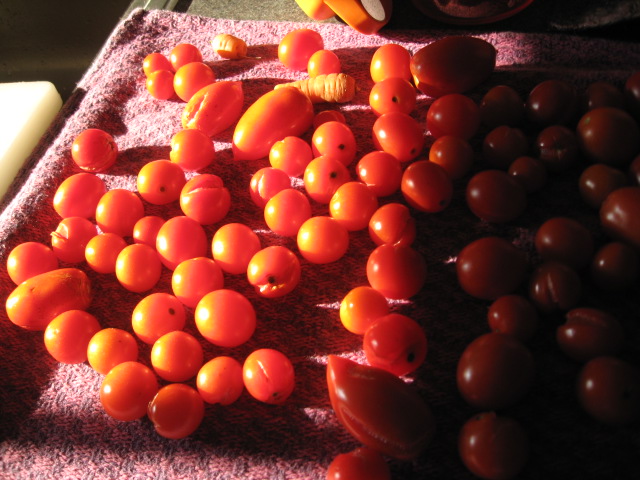
Cherry tomatoes spill over the counter top.

Cherry tomatoes (and one teeny carrot) spill over the counter top into late summer sun.

As a small child, I hated tomatoes in any form. I particularly remember hating spaghetti sauce; it seemed so sour, so acidic, stinging my lips and hurting my stomach. Like many green vegetables at that time, tomatoes also made me gag.

In one of the few food compromises I recall from childhood, my mother made a separate dish for me when spaghetti was served: Buttered Noodles. Soft, squishy, chewy, buttery, salty, peppery, heaping bowls of elbows; it was delightful to surreptitiously poke my tongue into one end of a noodle, split the bent tube and then stick that noodle-covered tongue-tip out at the others around the dinner table.  When finished playing, I could then chew it, and slurp up a few more, since butter didn’t show on my face like splashed tomato sauce might have–all of this presuming no grownups were around.

Comforting and simple, I loved buttered noodles’ starchy blandness–though I didn’t consider them bland;  I considered them delicious beyond words.

**

Then one evening I bravely tested a worm of vermicelli with tomato sauce and my head jerked up, “What?! You’ve been keeping this from me? I LOVE spaghetti with sauce!” My mother, I am sure, rolled her eyes. This particular jarred sauce was savory and didn’t make me feel icky at all. So I left the buttered noodles of childhood behind as my tastes matured.

But I still didn’t like all tomatoes, just spaghetti sauce. No fresh ones, too watery, and my mother agreed–there is no tomato like a New Jersey farm tomato; having none of those available in our Midwestern kitchen, she didn’t press the issue. As a teenager, I tried small quantities of chopped tomatoes on Mexican food, to cut the heat. Then thin slivers of tomato on a burger, or in a salad.  Over time I diversified, and now even love thicker sliced tomato with fresh mozzarella and basil leaves. Every once in a while I get that childhood gag reflex, but not very often.

Tomatoes in salad with carrot, cucumber, sunflower shoots.

Tomatoes in salad with carrot, cucumber, sunflower shoots and bacon.

I changed my mind, I grew my tastes. I didn’t have to force liking tomatoes either–my desire for them came on my own terms, without someone else’s requirements.

Along with tomatoes, I now eat all kinds of green vegetables–they are some of my favorite foods! and in another area, I have expanded past my color palette of jewel-like purple and blue to appreciate earth tones, browns and even oranges. (My kitchen is painted a dull historical green and accented with red, of all colors, with mud- and rust-colored rugs.)

Preferences shift, and I want to be open to that–not too rigid, in food and color choices, or relationships, or beliefs about the world. “Curious” is the word they use in Kripalu yoga.

As I increase my practice in preparation for Yoga School, I learn to be curious as I study the edge of my likes and limits. Ready to laugh at myself and my foibles.  Maybe I will grow to love huge dripping slices of tomato raw in my mouth–maybe I will grow to love the burning ache in my hip during Pigeon Pose or every damned time I lose my balance in Tree Pose.  Who knows?

Frozen tomatoes from the garden--part of the clearing out cooking!

Frozen tomatoes from the garden–part of the clearing out cooking!

….So all that serves as an introduction:  I used up some tomatoes the past couple weeks.

I’m pretty exhausted from weight lifting, walking in the snowstorm that arrived yesterday, and Yoga Flow sessions, so I will share the photos and leave references if you Gentle Readers desire the recipes. Every one of them used tomatoes.

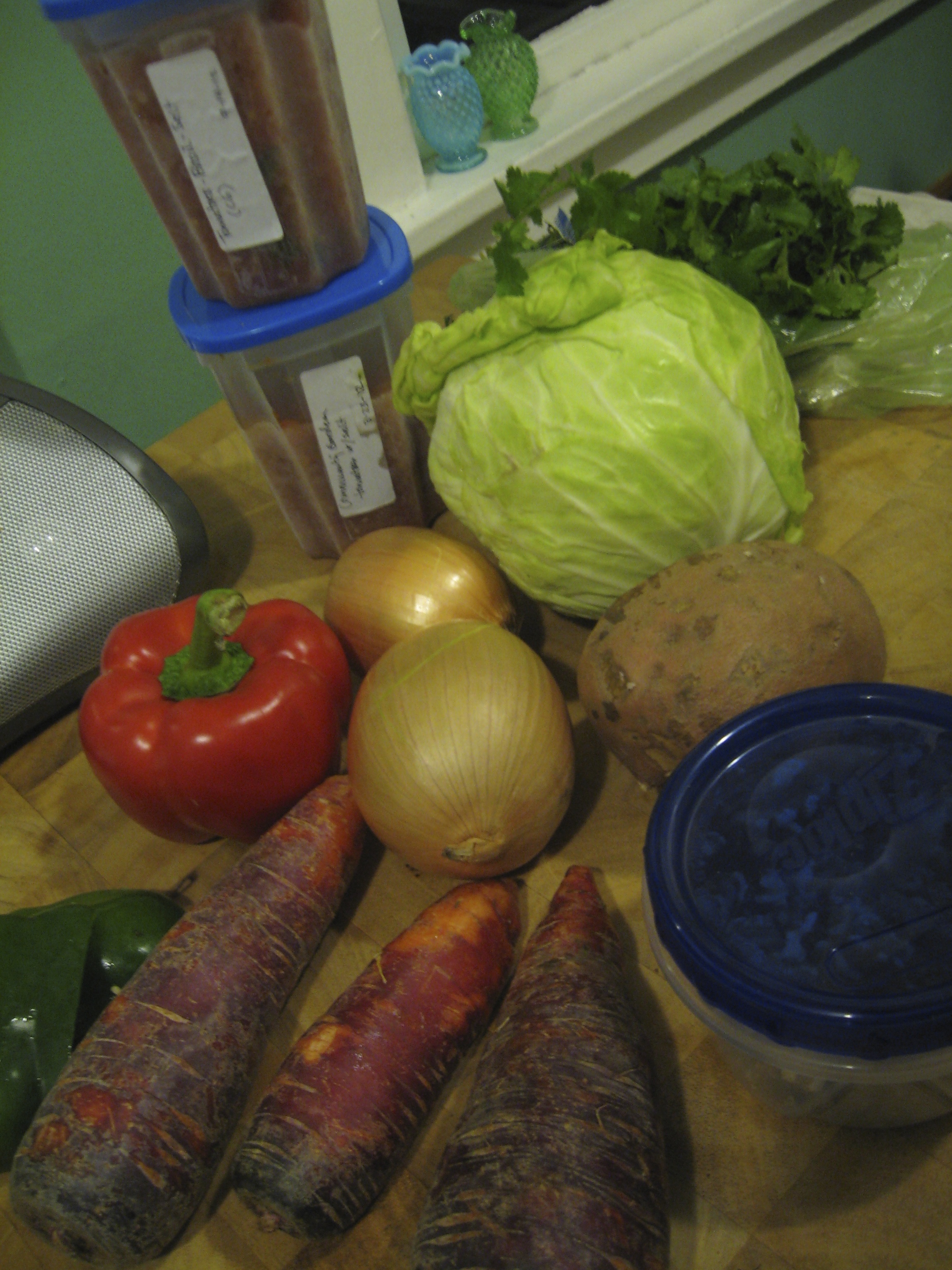
Piles of vegetables, including frozen tomatoes, crowd the counter.

Piles of vegetables, including frozen tomatoes, crowd the butcher block table.

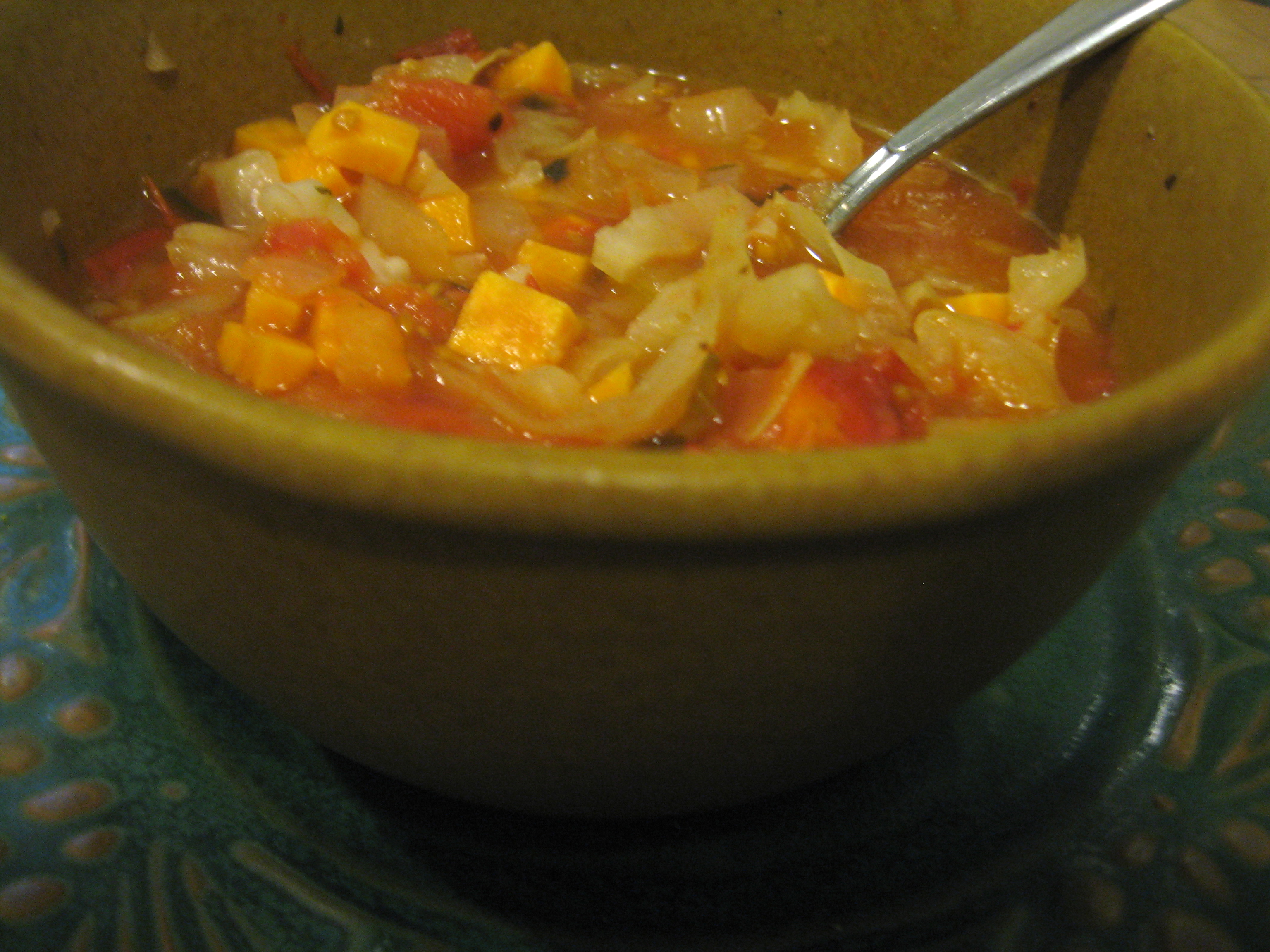
Cabbage and sweet potatoes formed the basis of Cape Verde Vegetable Soup.

Cape Verde Vegetable Soup, from Sundays at the Moosewood, published by The Moosewood Collective.

Cape Verde Vegetable Soup, from Sundays at the Moosewood, published by The Moosewood Collective.

The carrots and peppers filled out vegetarian chili.

Vegetarian chili, from The Moosewood Cookbook by Mollie Katzen.

Vegetarian chili, from The Moosewood Cookbook by Mollie Katzen.

My favorite adapted recipe, Green Chili and Corn soup, used tough late summer Community Garden corn softened by the freezing process, and more black beans.

Highly adapted version of Crema de Elote Soup (no cheese, no milk, waaay more green chilies) from Sundays at the Moosewood.

Highly adapted version of Crema de Elote Soup (no cheese, no milk, no potatoes, plus black beans and waaay more green chilies than originally called for) from Sundays at the Moosewood.

Plenty of tomato based soups and chilies to go around this frozen month of February–though I think I’ll make some buttered noodles, very soon.

I hated tomatoes and then I loved them, but only in some forms. What does that say about changing your mind? Being open? What happens when you don’t force things?

To Plan a Garden, And a Life

Finger Lakes vineyard, with Seneca Lake steaming on a 5 degree below zero morning.

Finger Lakes vineyard, with Seneca Lake steaming on a 5 degree below zero morning.

It flew in through my postal slot this week, a stiff green mailer I’ve received twice before: Continuing Gardener Sign-ups. It means that in February, I’ll toddle down to the public library, pay my small fee, re-read the rules, and confirm my plot.  Ok, so I knew the mailer was coming since I am a Garden Coordinator, but it’s satisfying to jot the date on the calendar anyway, marking the beginning of my fourth growing season with the Capital District Community Gardens.

We are in the midst of deep winter here in upstate New York; when it is absolutely necessary to wear gloves the minute you step out of doors or else risk wind-burned and skin-split fingers; when billowing road salt coats our cars and our street and our pants when we lean over those cars, even flies into our mouths if we are thoughtless enough to open them before tossing ourselves shivering back into our homes.

The standard picture of Gardener Dreaming About Spring is someone escaping that salty, snowy weather, cardigan-wrapped and hugged by an overstuffed recliner. The silhouetted figure, plush-slippered, pores over seed catalogs by a roaring fire, sipping hot chocolate or spiked cider as the wind screams outdoors.

I’m not exactly like that. Don’t own a recliner, fireplace, or seed catalogs, and slippers make my feet sweat. I clomp around the apartment in old socks and clogs and mostly I’ve used the seeds that are donated to the Community Gardens office or buy plants when the mood strikes me or they are on sale during the growing season.

However, this year I’ve been thinking hard about my planting choices. For example,  cherry tomatoes dominated my rows in the past–round red, little snips of yellow, some shaped like mini-butternut squash. I kept them because they volunteered from the first summer my garden was planted for me while I was recovering from surgery.

Now I think I want plum tomatoes instead.

The carrots were such a roaring success last summer, those tasty sweet morsels; if started early enough, multiple harvests would be possible.

I desire green beans, but don’t want to mess with the strings. Maybe I’ll grow lacinato kale along with my rainbow chard. And broccoli-one of my fellow gardeners shared broccoli with me, I could do that! I love broccoli. Perhaps I’ll plant the whole damn plot in flowers to cut for my dining table–then again, zucchini are not only traditional but useful.

I am practicing making choices, not just doing what I did before, not doing what is merely expected.

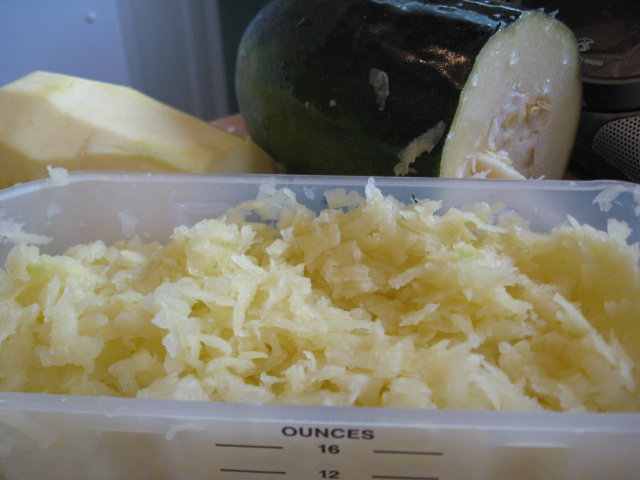
Last summer's zucchini shredded...

Last summer’s zucchini shredded…

...to make chocolate zucchini cake!

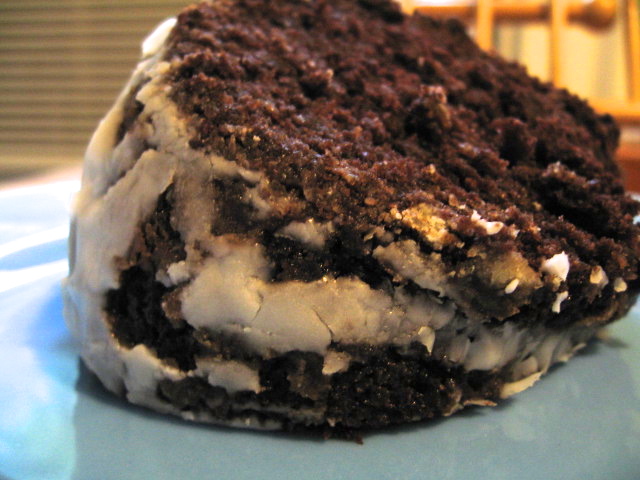
…to make chocolate zucchini cake!

Another envelope arrived this week, not through the mail slot but in my email queue (the way of so much these days), announcing my acceptance to a yoga teacher training program. Another spring planting to look forward to, drowse with by the metaphorical fire–though a more active drowsing, as my challenge now is not only to plan but to become physically stronger and more disciplined in my yoga, before I arrive mid-April. I also must battle my demons of self-doubt, in order for the A+ student to go back to school in a new and different way.

Like the garden, what do I plant?  What do I discard because it doesn’t work for me? How can I be publicly not-perfect, in a setting (learning) where I was so driven before? The plan: to be relaxed like I am about my garden plot: not the best and not neglectful, something in-between.

I’m going in as probably the worst student in Sanskrit names for poses, as well as a mediocre memorizer of everything else, with a life-battered body that hasn’t been doing yoga for very long. But my true subject matter will be one of the themes of Kripalu yoga: compassion. I will learn compassion toward myself.

When I am “not successful” at a particular physical or mental task, I will attempt to be successful at compassion for myself, and gentle even in discovering my lack of compassion. This I can do, and it is all I need to bring.

I vow to break out of my old gardener habits and make new ones, different ones, not sure what the harvest will be, but trusting it will be–something–something wonderful. Storms will come, and drought, and interruptions by the personal and political and societal–and the skills I’ve acquired in the garden will get me through what I’m calling “sleep-away camp” at Kripalu.

Here at the end of January I open the seed catalog of my life, once again dreaming the future into being.

Seneca Lake warmed by the sun, readying for the end of winter, and then spring!

Seneca Lake warmed by the sun, readying for the rest of winter, and then spring! Who knows what transformed things will come out of this ground?

Choosing Beauty in the Every-day: New Dishes

My first plate, resting on the Frank Lloyd Wright inspired placemats.

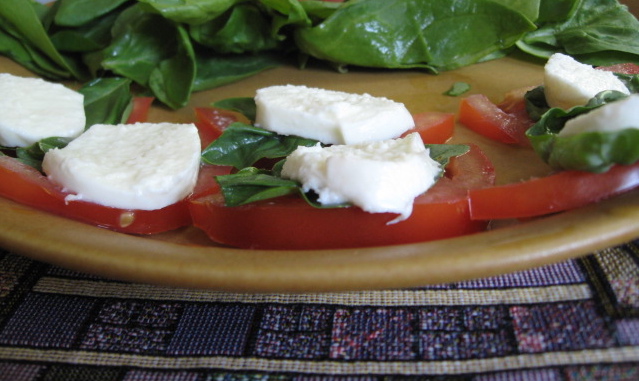
My first plate purchased in July, resting on the Frank Lloyd Wright inspired placemats: spinach fronted by fresh mozzarella, tomato, and garden basil.

Last week I bought the (almost) final dish in my new set of Bennington Pottery.

That’s important because three years ago, I found myself suddenly a one-person living unit, every room of the new apartment stacked with bins and cardboard boxes six feet high. I was Keeper of The Household as I had always been, but now with a much smaller Household to manage.  It was simultaneously frightening, sad, and a relief.

The containers spilled over with stuff saved for other people, for future needs and/or disaster: financial papers, cooking equipment, furniture, clothing, decoration–and dishes. Most of it had been purchased already-used decades ago, found on the street, or gratefully acquired as other people cleared out their basements and storerooms. The items didn’t necessarily match or work optimally, but they functioned, and when you are just barely surviving, that’s what matters.

Happy to have a very different life now,  I’ve been learning to go beyond the idea of just-surviving, especially since–as witnessed by the stockpiles of food I’ve been using up–I am releasing myself from the burden of so many belongings, the weight of saving in order to feel safe.

In addition, in the small amounts I keep, I want not only functionality but also beauty.  When my best friend was making a pittance on the front lines in human services, she would still buy a little piece of handblown glass or earrings, telling me:  Beauty is as important as food. 

Since Bennington Pottery is not only beautiful but relatively expensive, I’ve been acquiring the matte finish Elements design over time, buying most of them as “seconds” from the outlet or Potter’s Yard in Vermont (making me much more comfortable with the idea that I might break a piece here or there).  I certainly don’t need all of the sizes, just the couple that work for me ; I chortle over picking four different colors to mix and match, the option to make my table look different at every meal. The quirks in curvature and mis-splotches of color, part of being a not-quite-perfect dish, endear each salad plate and soup bowl to me.

Ham and lentil soup, toast with cherry preserves, in and on the new dishes

Ham and lentil soup, toast with cherry preserves, in and on the new dishes

During the factory tour on a slow day, one of the fewer-than-ten potters took visitors behind the scenes to see how they smooth and glaze and fire the clay.  To meet the artist-makers of my belongings moves me, and I often relive those discussions when I encounter the objects in my home.

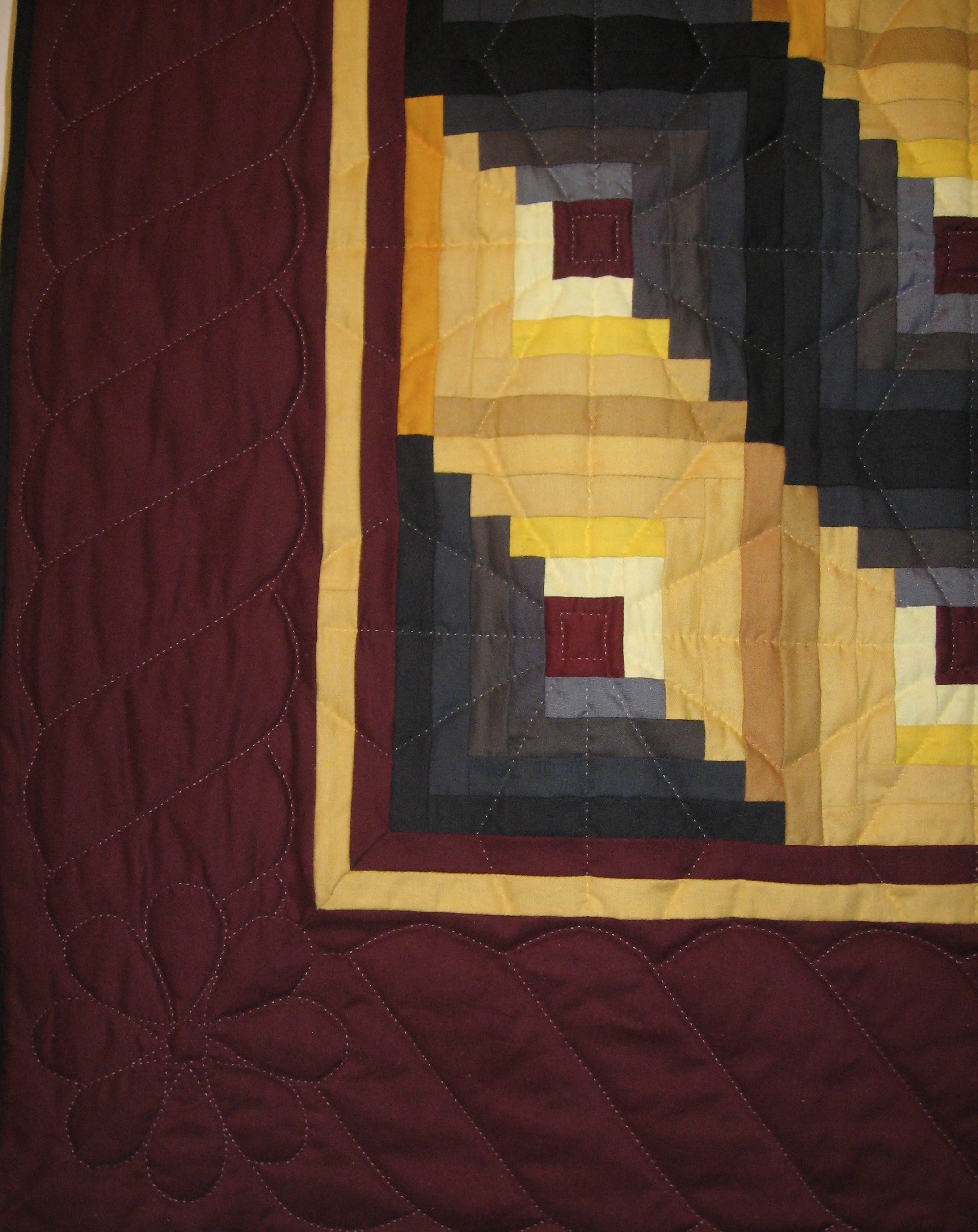
Behind the futon on which I sometimes sit while eating out of my new palm-sized bowls, hangs a yellow-and-red Amish quilt, signed on the back by a northern Kentucky woman named Ella Bontrager.  As I study its shifting geometry, the rainy April afternoon of its purchase returns: talking in Ella’s little farm-shop, hearing how her husband and daughter work with her, why she used a nontraditional “proud” color in this artwork, what is valuable to her and her community.

A corner of Ella Bontrager's Amish quilt

A corner of Ella Bontrager’s Amish quilt

My gaze moves to the purple and green and brown placemats I splurged on at Frank Lloyd Wright’s Darwin-Martin house in Buffalo.  The nuance in their colors and patterns frequently draw me to thoughts of architecture, simplicity and beauty–same as the quilt and the plates.

In the window, light glows through two tiny hobnail glass vases.  From over three dozen of varying sizes, I have kept only a few; the rest were donated, moving on to other people’s homes for their flowers and their meditations. The mis-matched plates and bowls from my past left in that give-away box, too.

Every day we eat off dishes and placemats, look at interior walls and surfaces, use the items we share our living space with.  How do we make this inside life beautiful?  What choices do we make, what do we get rid of, to add beauty to our lives?

Moments of startling light.

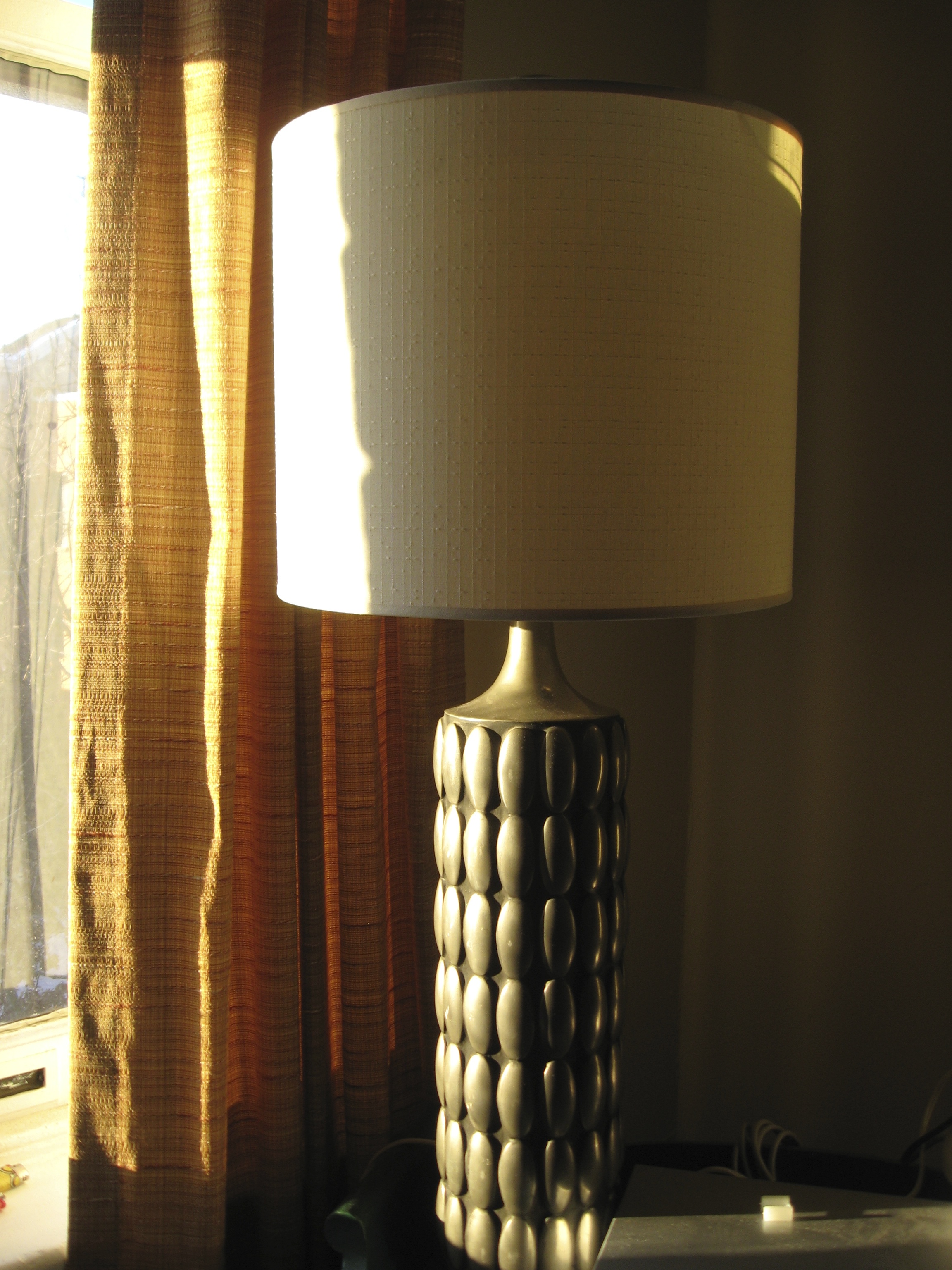
A moment of warm afternoon light.

To Clean is To Wander is To Meditate

Clean colors of evergreen against the snow, Dyken Pond Environmental Education Center.

Crisp colors of evergreen against the snow, Dyken Pond Environmental Education Center.

A few hours ago, my hands were barely able to curl around a knife in order to butter a bagel for dinner. Even now, it’s not easy to grip and flip open the laptop, and type. I plan to do an hour of yoga later, but along with achy wrists, my knees are sore from kneeling on the kitchen floor–not brush-scrubbing; I don’t have Cinderella fantasies–just wiping and rinsing, wiping and rinsing, the layers of dust and dripped food from Christmas and New Year’s and daily living.

And vacuuming–I seem to have lost, or never owned, the extension arm to my vacuum, so the bare-floor attachment clicks to the end of the hose and requires an up-close relationship with the floor to maintain contact. I did manage to squat part of the time but often the angles were too awkward to maintain. Hence the bruised kneecaps and cramp-y hands.

Tools at hand! my vacuum

Tool at hand, back together for the rugs.

It was time. The apartment needed cleaning way before the holidays, but since I had December guests coming, including a large, sweet, and very fuzzy dog, I only disinfected the bare minimum before their arrival, and left it at that.

Until this week, when it couldn’t be put off any longer.

When I thought about each room and how many things needed to be moved in order to de-grime properly, my old surgical aches came back–a wonderful indicator that I need to approach from a different mental angle.

I used to be very list-driven. The lists always started out long, and even as I circled jobs-done, more got added, seeming to approach infinity.  Now the inventory is general: “clean kitchen, clean bedroom, clean front room, clean dining room.”  I wander from space to space, trusting that the big job will get done through all the little jobs I feel called to do.

The question I ask: What will make it enjoyable, and let me do something I’ve secretly really wanted to get to? 

The speed I go, even with the compulsion to rush, since there’s so much to do? Slow.  And when panicked? Even slower.

Yup, house cleaning as meditation.

Today’s answer as to what I secretly want to do?  Put on my bed the new blue and white batiked duvet cover from Ten Thousand Villages. Well, have to change the sheets and sweep the floor first. Doesn’t that feel good, crisp sheets and plumped pillows? Oh, but I have to dust all the surfaces before doing the floor!  All right, leisurely pull every piece of jewelry off the hanging organizer, wipe the hooks and smile over the beads, the iridescent bangle, which earrings went with the sparkly outfit, for that delightful community dinner on Christmas Eve–and for the raucous snowy romp with the dog on January First….

Objects hold memories and I remember, as I handle them.

A bit of feather-down, fallen into snow at Dyken Pond.

A bit of feather-down, fallen into snow. Remember the snowy walk?

Another answer to the question about what brings joy for me today: organizing all the snowshoeing gear, after drying my trekking poles.  Ok, better stack the grocery bags to go out to the car, which reminds me–start the shopping list.  There’s the camera–upload the photos from the latest walk at Dyken Pond, where I got the gear wet in the first place. And wasn’t it a great walk?

A third job to bring relief:  moving the red chair into the front room, exchanging it for the reading chair, whose awful green checked cushion at last gets covered with a deep purple fringed blanket. Vacuuming the dining room wasn’t so bad, I can finish this quickly and after moving the chairs, pull out different candle holders–look, there’s the battery charger I’ve been missing!

All day, for days, I’ve wandered and somehow along the way become motivated to do the hands-and-knees cleaning that has now transformed my living space.

Finally, all those wonderful negative ions have been moved around, along with my belongings. I learned last year how to rearrange photos and sculptures so I see them again, how to shift the tchotchkes endowed with history and stories so I recognize and appreciate; after sitting in the same-old-same-old spots, my eyes would no longer be caught and would pass over them–along with that slight layer of dust that faded everything.  Now I’ve cleaned the dust, I’ve re-seen the objects, all is new again.

IMG_0114

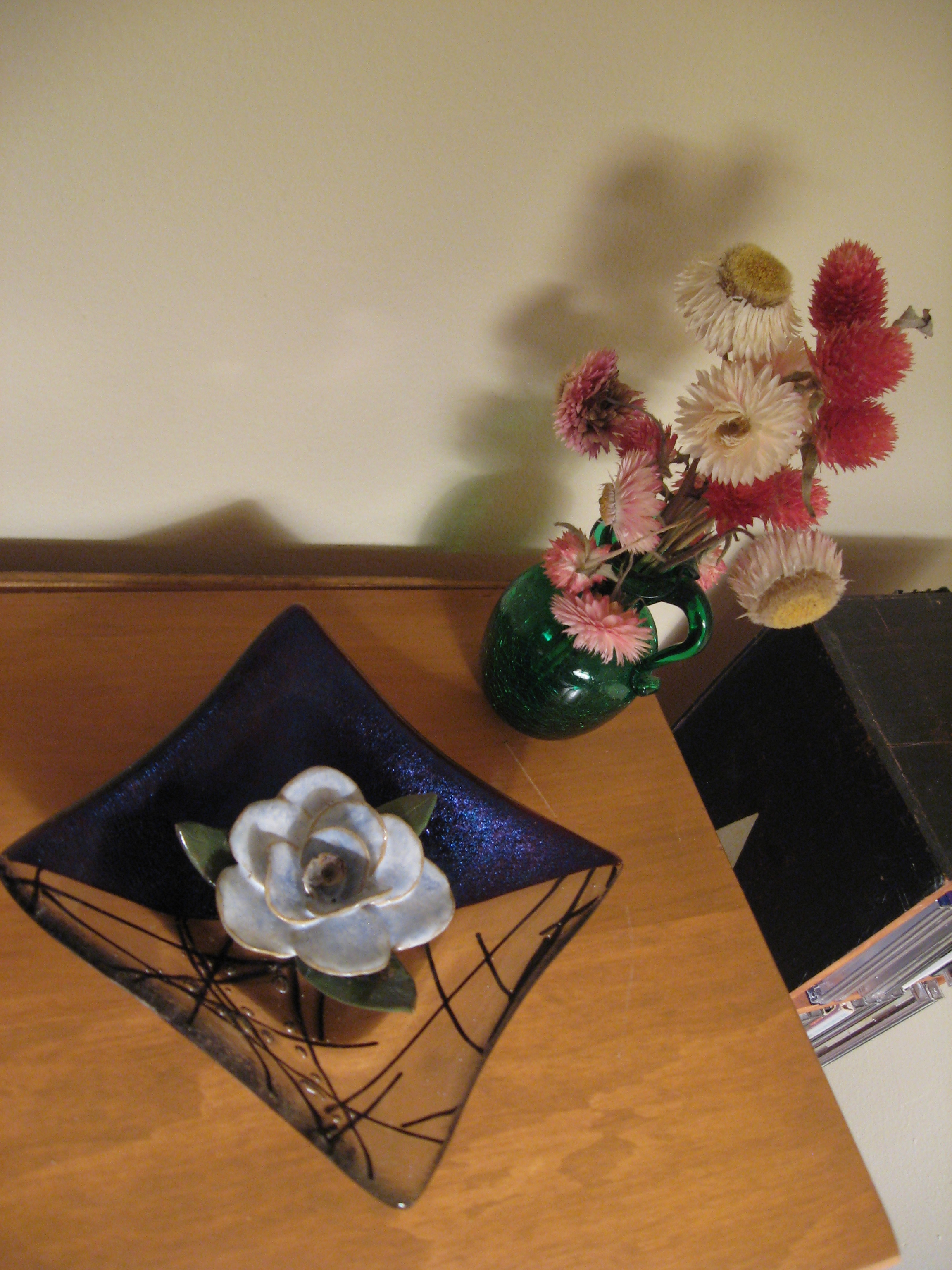
Now I can see the art glass tray, the ceramic lotus, the dried flowers still bright with pink and yellow.

A confession: the bathroom only got a quick wipe down, and it will take a couple days to really scour the kitchen.  But wood is glistening and lights shining brightly, surfaces are clearer and paintings placed in new positions of honor.  A votive flickers in the window.

Tomorrow morning as the tea water comes to a boil, I’ll do more smaller-scale wandering in the kitchen:  washing dishes, wiping down cabinets, reading recipes. I’m cleaning, I’m dreaming, I’m wandering; I’m meditating my future life into being.

The rhododendron blooms are already set January 8th; they need only wait for spring.

The rhododendron blooms are already set here in early January; what does that say about being more ready than you think?  about not needing to rush? about trusting in Spring?

Phyllo, and Preparedness

Lemon that has been cooked in syrup for baklava: honey, water, orange blossom water

Lemon that has been cooked in syrup for baklava: with honey and orange blossom water

Mom, is there any GOOD STUFF in here? 

Sweetie, some guys from the lab want to have a party, just a little one. What do we have for appetizers?

She’s not eating meat anymore–well, maybe sausage, but not pig-sausage.

Ten people from the social justice group will be coming by post-conference for dessert.

Your apple cider cornbread is scrumptious! 

The church needs platters of cut-up vegetables for a funeral reception.

His unemployment check is late this week; do you have a couple slices of  bread for the kids’ sandwiches?

Can we drop by and talk at dinner time? I’ll bring wine…

Yes, a vegan birthday cake–how about that carob one with peanut butter frosting that you made for last year’s party? Oh, and some of the kids can’t have wheat.

Mom, is there any GOOD STUFF in here?

**

I loved meeting people’s food needs. And I still do.

But I had a different life before; my personal food requirements have changed, even though my buying and supplying habits have not–yet.  Hence the recent challenge to make dishes with what I have in the house, and then face the world empty-handed, empty-casseroled.

Don’t get me wrong–vegetarians, vegans, and omnivores still visit; I welcome the gluten-intolerant, yeast-free, soy-sensitive and low-fat, the teenager-like appetites, but also smaller appetites as well.  Tasty comestibles invite people to come and relax, and I want to create a comfortable place for not only myself but others as well.

However, it’s crazy, even as a personal chef, even as someone who likes to cook to special dietary needs, having this much food around.

For example, I discovered that I had all the fixings for a recipe out of an old Country Living Magazine, involving leftover Thanksgiving turkey and half a pound of phyllo dough.  The other half-pound of phyllo went into baklava –for which I also happened to have all the ingredients.

A little ridiculous, but indeed, I am the kind of person who often has phyllo dough (and a thousand other odd ingredients) in the freezer; I respond to any possible incredulity–well, I might have a spanakopita emergency!

When I mentioned this at a writing group recently, thinking I was the only crazy one there, four out of four of us had the makings at home, at that moment, for spanakopita (spinach pie with feta).  Along with ingredients for Indian curries, pesto, and multiple varieties of soup.  So does that just mean we are all foodies? Or that amazing numbers of people are now conversant with multicultural foods? Or do all four of us happen to regularly host huge numbers of last-minute get-togethers?

Some or all of those theories might apply, but it’s bigger than that.

We women are taught to have plenty, to be plenty.

We are called on to make miracles with what we have on hand, so we learn to have a lot on hand: in our pantries, in our emotional capacities, in our organization of tasks large and small, in our intellectual understanding and knowledge of the world.

We utilize our reserves over and over again, often struggle to keep a brave smile, a “full pantry” all the time, without opportunity for rest and rejuvenation.

**

In performing my usual writerly vocabulary-check I asked:  For my title, does “preparedness” differ from “being prepared”? The dictionary answered: Preparedness is the state of being ready, especially for war.  Ah! so this is like war for the keepers of the larder: under attack, scarcity approaching.

Apparently, this incipient battle requires phyllo dough at-the-ready.

And guacamole and salsa and four kinds of crackers for the various demands that might present themselves. Humus, tabbouleh, pita chips. Chicken, hamburger, mozzarella, edamame. And ingredients for phyllo poultry pot pie, and baklava.

Sautéing in my enamel pan, for pot pie

Sautéing pearl onions, carrots, parsley in my enamel pan, for pot pie

As a belt-and-suspenders person the message is:  be ready for emergencies, don’t be caught unaware, unready, especially if you know it is a possibility–and so many bad things are a possibility. 

Lately I am learning instead: Yeah, I’ve had it scarce, but I am learning to trust if the world falls apart, my community and I will work it out.  I’m prepared but don’t need to live in a state of fearful preparedness. I am acceptable with my hands empty; I will not go hungry. 

In addition, I can choose when and where my arms are open and gifts are shared, to choose without incurring exhaustion or potential resentment–claiming my right to decide what I want to offer, and when.

Even though it is tasty and fun–I don’t always have to have phyllo dough in my freezer.

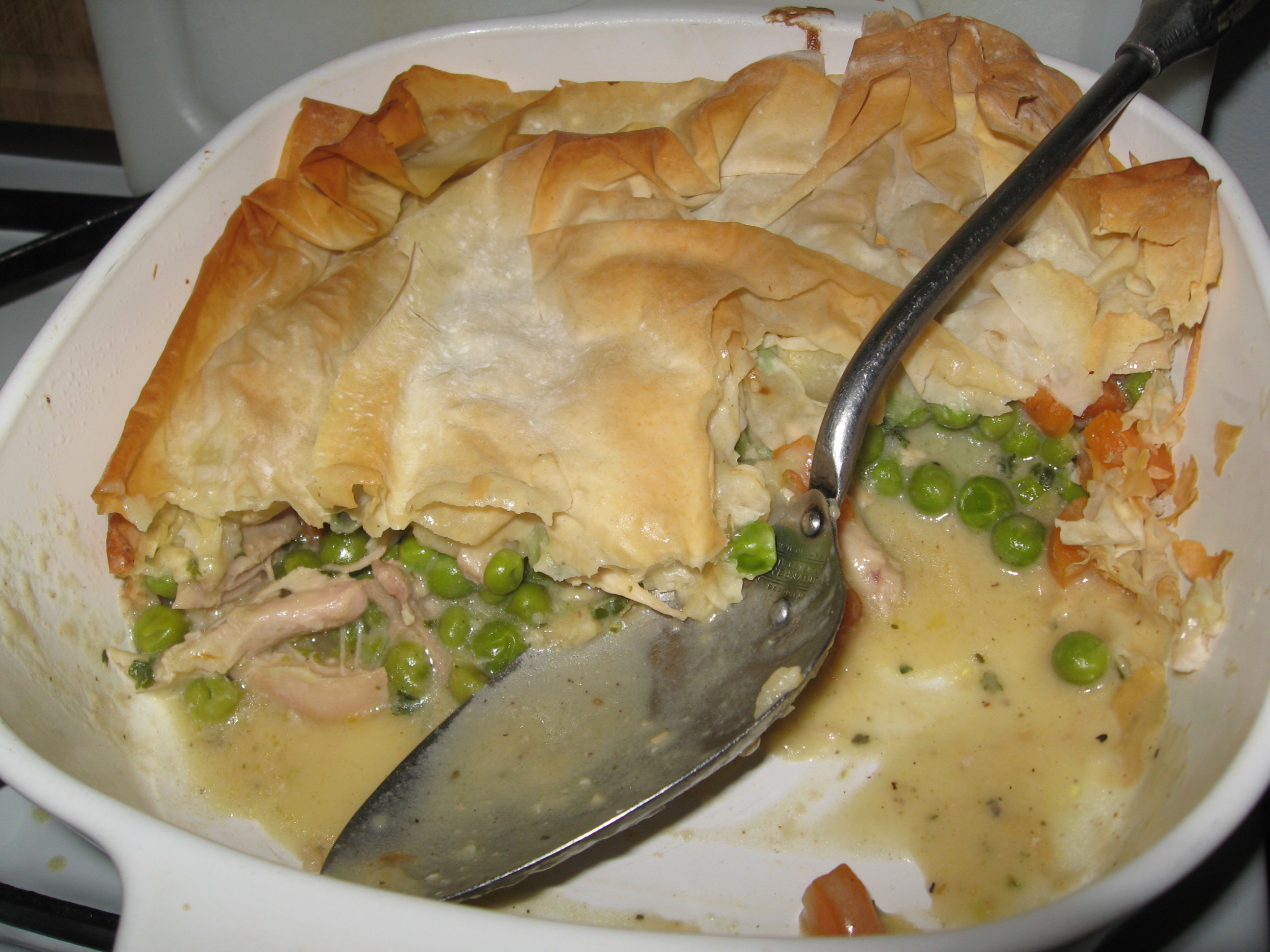
Phyllo chicken pot pie

Phyllo chicken pot pie, with peas in gravy

RECIPES, WITH ANNOTATION

Chicken (originally Turkey) Potpie with Phyllo Crust, adapted from Country Living Magazine, November 2010, page 112.

I cooked in a large skillet over medium heat: splash of olive oil, 10 oz fresh pearl onions (boiled for 2 minutes and plunged into cold water for two minutes so you can cut the ends and squeeze out the center portion without hand-peeling), cooked them until golden brown, about 8 minutes. Added 3 community garden carrots, diced, and garlic from the fridge. I cooked all that about 5 minutes, until the carrots were just tender, and stirred in a handful of community garden parsley. Sprinkled vegetables with 3 tablespoons of flour and cooked a little (the original recipe called for flour to turn golden brown, but it was too easy to burn it).

I added 1 1/2 cups chicken broth–made from chicken pan drippings (including Pappadew seasoning, salt, pepper, garlic, olive oil) AND a cup of 2% milk, a squeeze of spicy brown mustard (the original recipe called for Dijon, didn’t have it, oh well), salt and pepper. Cooked until mixture thickened, about 6 minutes. Stirred in 2 1/2 cups shredded roasted chicken, 1 1/2 cups frozen peas (rinsed since they’d been in the freezer so long), and broken up Community Garden dried sage. I used half a box of phyllo with butter softened by sitting in the hot kitchen.  Don’t have a pastry brush so used fingers to brush butter here and there between the sheets, and on top, baked in regular oven at 400 degrees for 20-25 minutes, watching the phyllo turn medium brown.

The Baklava recipe came from The Joy of Cooking, and I even had essential oil of Neroli (orange blossom) in my aromatherapy supplies to make the called-for, very dilute orange blossom water. It added a subtle, delicate aroma to the syrup.

I used local honey, a fresh lemon left from Thanksgiving, half the butter the original called for, cinnamon & cloves, sugar, chopped pistachios, walnuts, almonds–and a half-pound of phyllo dough.
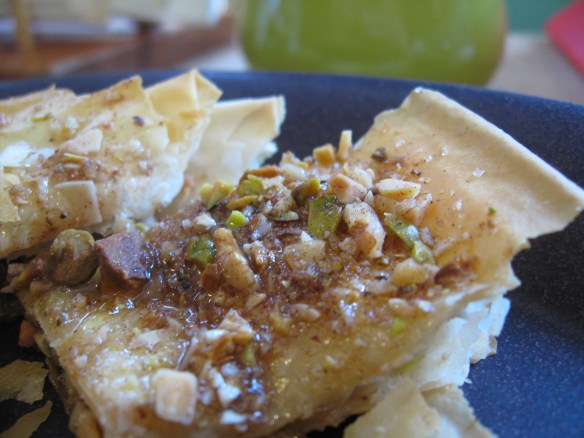
Plated baklava, glistening with honey and crystals of sugar

Plated baklava, glistening with nuts in honey-syrup, and sugar crystals on the edge