Part the Fifth, Wherein I Am Surprised, and Meditate on Metamorphosis


Surprise! on the bedspread

Surprise! on the bedspread

February 17 2015. I can’t believe it—thought I’d lost the butterfly, that our short term friendship, for that’s all it could be, was done; but when I went into the bedroom, there she was, after two days, on my bedspread! I laughed out loud, even skipped a little, couldn’t believe it! How did she get there? Why was she there? Giddy, I got my spoon of sweet water in case she needed it.

She wasn’t quite so excited as me–or thirsty; perhaps she found other sources for nourishment in the kitchen when I wasn’t looking. I still couldn’t believe she was back. If she were on the bed in the night, I could have crushed her, but apparently she is busy taking care of herself, flying around my apartment, exploring and living her own short little life.

I want her to go back to the kitchen where it is safer but she is having none of it. Thank you very much, I prefer the rug under your bed. Like my children as infants who pressed their lips together to refuse more baby oatmeal, she knows what she needs better than I.

So she’s had a drink and her picture taken again, and I’ve left her to her own devices.

Resting on the carpet.

Resting on the carpet.

I didn’t know I’d missed her so much. Or rather, that I would be so excited to see her again. I’ve gotten to know more and more, as I’ve read about the butterfly life cycle, Dainty Sulphurs, and different families of butterflies. (Did you know that Monarchs have six legs like the other butterflies, but two of them tuck against the thorax, having lost the ability to aid in walking?) I fear showing too many photos of her to my friends and blog followers, like an obsessed parent incessantly pushing phone images of their cute child.

A friend came by, curious about the butterfly visitor and when I talked about feeding her, said, Oh I think you are not supposed to use honey; I know with hummingbirds you use white sugar. Just in case, I start mixing sugar and water….

I’m talking to a butterfly, in my bedroom.

A more external metamorphosis, of wood into nutrients.

A more external metamorphosis, of wood into nutrients, at the north end of Partridge Run.

The idea of metamorphosis now strikes me, all those grade school posters about caterpillars becoming butterflies, stories of ugly ducklings becoming swans. What being “ugly” meant to me as a child—a label I took on as a chubby kid with glasses. It still horrifies me that the duckling—actually a cygnet—was considered ugly and had to grow into some culturally defined idea of perfection, of others-judged beauty.

What if, instead, we felt perfect as we are, comfortable in our skin even as we grew into something else? That each stage, even in its clumsiness, was considered beautiful?

I was told once that in the metamorphosis of a caterpillar, its face melts. What a thought. In order to change, you will not be able to recognize yourself, because you change so very dramatically. Am I willing to take on that kind of scary change?

When I did research and found the original article, (by Ferris Jabr, at ScientificAmerican.com, August 10, 2012) I learned that it’s not just the face that melts—the whole caterpillar dissolves inside the chrysalis. Releasing enzymes, it digests itself, creates a kind of caterpillar soup, Jabr calls it, though with special organized cells called “imaginal discs” that help it reorganize to the next stage, into the butterfly with wings, antennae and mature sex organs.

What lessons for myself from this re-encounter with the Dainty Sulphur? To take time apart, build my own chrysalis for change, tuck in to look within myself, then take on the change, and emerge. Not to emerge too early. Not to do it without the structure and support I need. To know flying—whatever that means for each of us—is possible even if we can’t imagine it right now.

We have within us what we need for the next step. The taking of the next step can be messy, scary, and look disorganized, but it is exactly as it was and is supposed to be, when we move into it.

Yes (of course), to be continued.

Winter sun in the woods, waiting as things grow and change under the snow.

Winter sun in the woods, waiting as things grow and change under the snow.


Part the Second: Wherein the Butterfly Drinks, And I Consider the Bugs in My Living Space

Dainty Sulphur, drinking!

Dainty Sulphur, drinking!

I’m still talking to a butterfly, in my kitchen.

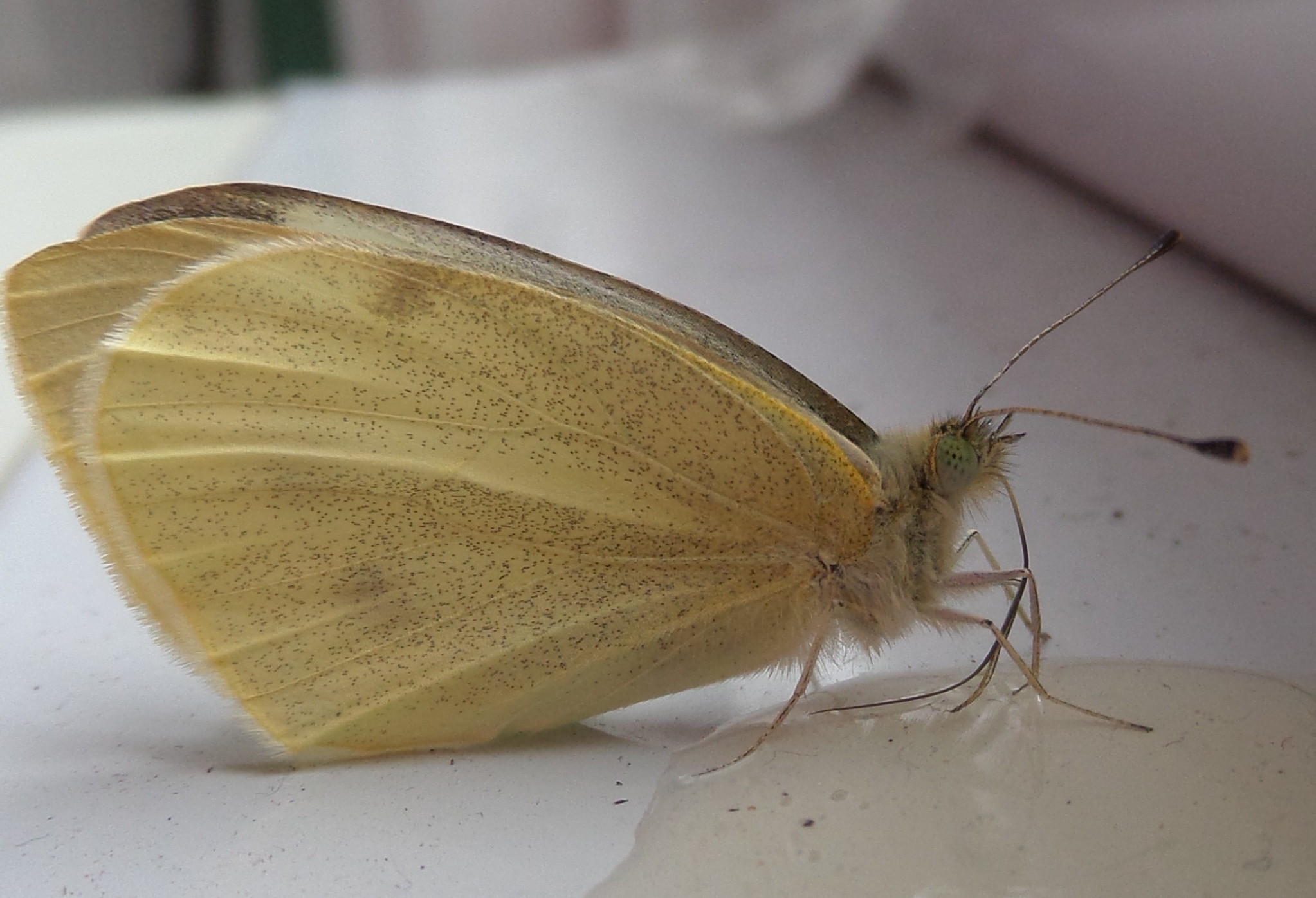
February 12, 2015, later that day. Since she would not come to the tiny plastic feeder that I put out, this afternoon I spilled some of the honey water right next to her, onto the top of the air conditioner. She actually came and drank! It was fascinating to watch: antennae started waving once her tarsi (feet)—through which butterflies can “taste”—hit the liquid; her proboscis unfurled, so long it went under her belly, but into the fluid; and then she stepped away and curled the proboscis up again.

See the C-shaped, rolled up proboscis?

See the backwards C-shaped, rolled up proboscis in front of the green compound eye? The feathery looking bits above that are the “palps” which sense what is food and not-food.

Thinking about her survival, I flit between hard-edged City Woman and warm Earth Mother. Well, anyway, I say, there’s your honey water for a couple days. Don’t get stuck in it. Now she’s looking all satisfied, her previously flopped down abdomen—which is the hind end, with the center part actually called the thorax—bent up high.

Am I stupid to put out this sugary fluid for food? Aside from getting stuck in it, her wings might get wet! I blow gently; no, she can pull them up just fine. Nothing like a snack, I think. I could use one myself.

I am playing with anthropomorphism again, I realize, but am really, really clear I know I’m doing it.

****

The Dainty Sulphur is a small crushable creature, one of trillions.

I’ve stepped on, swatted and flattened probably hundreds of bugs its size and much larger: horrifying palmetto bugs and leaping hairy spiders in the Florida of my childhood, and hordes of German roaches in multiple student apartments. Even mice and rats were caught and drowned when they overran other living spaces. My mother always said to invading creatures as she squashed or sprayed them: You can live outside, but I can’t let you stay here. This is MY space.

I don’t mind sharing, but not with things that bite or sting me, or spread disease. I’m really allergic to dust spider bites and mosquitos, but understand that larger spiders and thousand-leggers eat such critters, so yes there is a hierarchy of acceptable and unacceptable bugs in my living space. I can whisk unwanted ones—bees, wasps—out the window but if they don’t go I can become insistent, and murderous—depending on how you define murder.

Luckily butterflies don’t hurt humans, though we can hurt them.

Chicago Botanic Garden.

Late summer Chicago Botanic Garden.

Carolus Linnaeus was the Swedish physician who established “binomial nomenclature,” the multitiered system of scientifically naming plants and animals. I recall the huge bronze statue (which, when my children were small, you could still belly up to and touch) of a kneeling Linnaeus at the Chicago Botanic Garden.  Up close, Linnaeus’ roughly hewn figure was formed of creatures and plants alighted on him, under him, wrapping him; with the collecting bag on his hip and eyes open and curious, his eager hand reached out to touch and identify still more on the ground.

Dainty Sulphur Butterflies, in Linnaeus’ classification are truly Insecta, and moving more specifically down the entomological nomenclature, fall into Lepidoptera (moths & butterflies) and Papilionoidea (non-skipper butterflies; do you see the French word for butterfly “Papillon”?), Pieridae (whites, yellows, sulphurs), Nathalis (sulphurs) and her full name: Nathalis iole.

Like a softie, I’ll leave the sweet water there for a while, probably wipe it up and then put out fresh, for this particular Nathalis iole. (Boy I hope I’m right that it’s a Dainty Sulphur! I would hate to find out I am All-Wrong scientifically.)

I cannot guarantee this butterfly’s survival or quality of life. However, I don’t have to squash this insect either, “put it out of its misery.” She does not harm me, and in fact is a little company, on a cold cold day.

Because bitter wind chills, twenty and thirty below, cause me to hunker down inside, both of us are stuck in my apartment for now. And I am getting to know this creature better.

Sure is snowy and blowy out there, isn't it?

Sure is snowy and blowy out there, isn’t it?

To be continued.

A taste of full summer with fountains: Brazilian vervain (verbena), which butterflies come to visit.

Remember summer? Fountains with Brazilian vervain (verbena), which butterflies come to visit (Chicago Botanic Garden).

Part the First: Wherein the Butterfly Arrives

My unexpected visitor.

My unexpected visitor.

February 11, 2015.  I’m talking to a butterfly, in my kitchen.

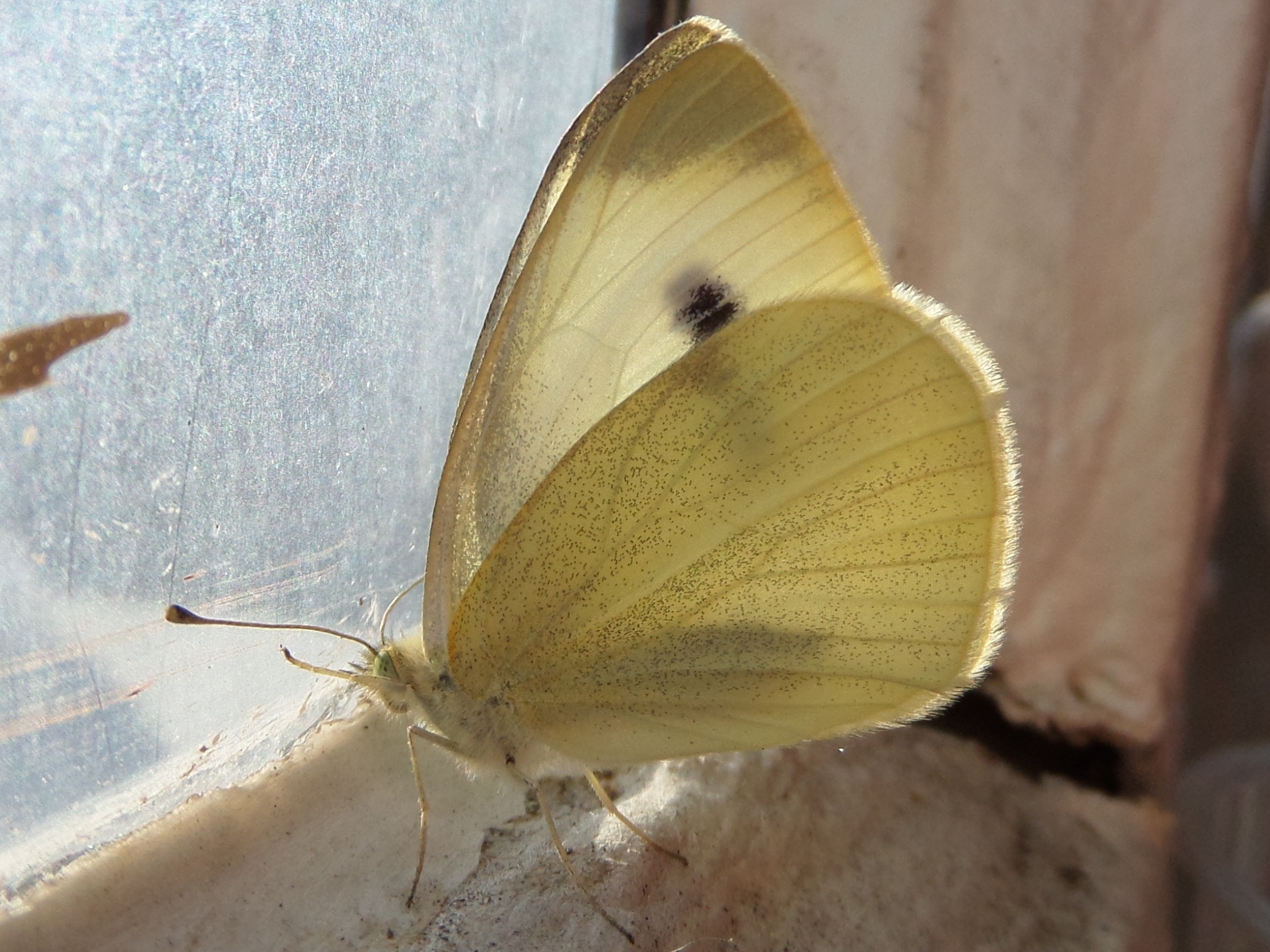
At first I thought it was a moth. My internet research indicates it’s a butterfly, and might be something called a Dainty Sulphur. I have no idea how it materialized in an upstate New York brownstone in the middle of winter.

Could it have been hiding in my apartment and if so, where was its chrysalis? Could it have traveled from another part of the country, the pupa attached to the dried moss of my December birthday amaryllis? Or did I carry it in with my bags of produce from the Niskayuna Coop?—after all, bananas, grapefruit and even paper bags come from far away.

Further investigating Dainty Sulphurs, I find its arrival proves somewhat unusual—they are not native and don’t overwinter here or fly in every year like an immigrant species; in fact, they are considered a vagrant species, one that only rarely comes up from the south.

It seems to be a summer phenotype, too, because of the yellow hindwings. In a winter individual, the hindwing would be greenish-gray, with additional black patches to absorb solar heat.

Sun-seeking.

Sun-seeking.

If I were to anthropomorphize—which as a scientific person I tend to avoid—right now it looks like the perhaps-summer butterfly is perched staring out the window, yearning for the sun, a whole-insect-body aching for outside, to move and flutter and find nectar and other butterflies.

When I go to bed, the butterfly is still there.

February 12, 2015. I know if I let it outside, it would freeze. I know inside, it will not survive, though how long does a butterfly live anyway? However, it certainly won’t mate, and I don’t quite know if and what it needs to eat and drink.

My sentimental heart, in spite of my lack of knowledge about butterflies, caused me yesterday to put out a little water-honey mixture, like you would for hummingbirds. This morning she—further research indicated it’s definitely a Dainty Sulphur but probably a female because she doesn’t have the reddish-orange hindwing scent patch of a male—this morning she was still resting, midlegs and hindlegs on my peeling paint window ledge, forelegs on the icy glass, peering out with her compound eyes.

Do butterflies sleep? She’s in the same position, and hasn’t touched the honey-water I dripped onto a tiny flipped-over plastic cup. (I thought it was a perfect shape, like a birdbath with an edge to rest on.)

Inside, looking out.

Inside, looking out.

Her position looks like: Mom, Mom, I want to go out and play! Like my kids used to sit on the back of the couch, heads in palms and feet warm on the radiator, looking out into the snowy exterior, thinking of all the adventures to be had later in the day, once breakfast was done and snowsuits were put on.

But this butterfly has no snowsuit and I have none to offer it. If nothing else, I will at least accompany this creature as we both look out the window, into the deep snow, into the near future. I don’t want to be a well-meaning idiot, like those who “rescue” baby birds from perfectly fine nesting areas when they have ventured a ways from their nest. So I’ve gone online and further studied forms and colors, behavior, size (yes at 22 mm she is a Dainty), and learned that the honey-water is perfectly acceptable food.

Mostly I marvel once again at the variety of things I have not seen, or did not look for, that I am discovering now, thanks to my Dainty Sulphur.

To be continued.

(Many thanks to my favorite insect information and identification website, Bug Guide.net, and in addition, the North American Butterfly Association website. I invite comments, especially from lepidopterists!)

Lions and Tigers and Peaches, Oh My!

Orange newt in thick mud, August, Partridge Run

Orange newt in thick August mud at Partridge Run, Berne NY

Over two months ago, my buddy C and I hiked an overgrown path at Partridge Run, south of Albany. Like two girls in a fairy tale, we hopped and skipped and lolly-gagged, cameras instead of baskets-to-Grandma in hand. Small frogs surprised, bursting up with powerful rear legs from well-hidden spots in the mud. Orange newts appeared and disappeared, foreshortened limbs squiggling their torsos in cartoon fashion. We moseyed along, but then were stopped short by encroaching poison ivy and, smartly, turned around.

On the trail back to the car we spied something. A dark thing, in the middle of the path. A rock? A tree limb? An ailing creature? Cue the scary Little Red Riding Hood music.

I kneeled down to examine it. Looked up at my hiking partner, concerned. Looked down to take in the evidence again. Squinted up as we nodded simultaneously.

Yup.
Looks like it.
Bear, huh?
Yeah, see the blackberry seeds in it?
It smells musky around here–must be pretty fresh.
Oh. Look here in the mud. A claw print.

Straightaway we realized we should have been alert in the woods for something other than late summer wildflowers, amphibians, and butterflies. We quickly re-oriented to the aqua paint on the trees—Long Path “blazes” that marked our exit out.

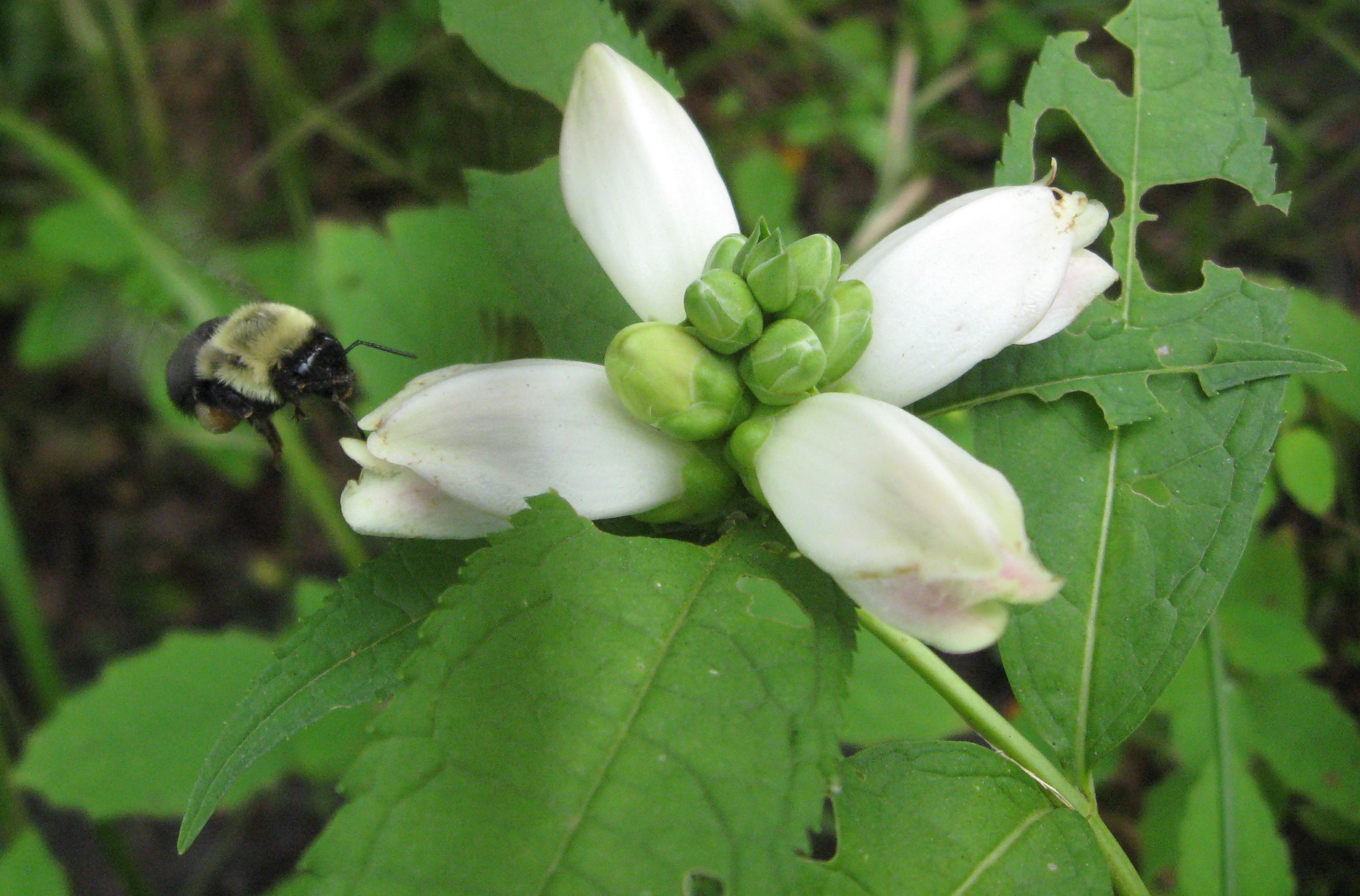
Bee on the wing in late summer

Bee on the wing, before.

Only once before I’d been close to a bear in the wild (and known it), and that was a few months earlier at Kripalu. One early morning as the sangha gathered around a guest speaker, he noted drily: “You may want to look out the window.”

Across the back lawn, a youngster Ursidae was galumphing and gamboling, presumably drawn by the smell of our breakfast cooking. Since we saw the bear through glass, it was much more like a zoo encounter than a live one, though it made us all think twice before taking the paths alone at dusk.

Bears have also shown up in my nightmares, though not recently. Terror comes from a sudden smothering attack in the dark, from the inability to escape a creature so much larger and more powerful than me.

What I do know outside of nightmares: Black bears live in this part of New York, but not brown bears or the subset of brown bears known as grizzlies, which have a reputation of being more aggressive than black bears. The advice: Don’t hang out near rich food sources like fruit. Don’t get between a mother bear and her cubs. Hibernation starts in October and if you see a bear in January be very careful: it is likely a female, in labor, the most inclined to attack.

On the other hand, I have heard many stories of fairly peaceable bear-human encounters, where everybody just backed away.  Because, very importantly, bears are reclusive, prefer not to run into humans, and so we hikers should proactively announce our presence by making noise, shaking bells or singing.

***
Therefore, back in the woods, my helpful hiking mate, who was aware we should not be silent in case we came upon the depositor of the dung, began to shout.
Oh Mr. Bear, Mr. Bear!
SHE’S the plump and juicy one. I am the old stringy one. (Pause, as if listening.)
Yes, the one with the baseball cap, that’s her.

Only half-laughing, we sped our legs to cover territory fast, then faster. She continued:  Oh Mr. Bear, Mr. Bear! We had a lovely visit but we’re leaving now!

Arriving unscathed at the car, we weren’t ready to give up on our day in spite of run-ins with poison ivy and bear poo. We drove south, arriving at a more civilized path, one that led to Tubbs Pond.

I remarked as we sat down by the water, Glad I didn’t stop to eat my lunch in the woods.

Then it dawned on me the horrendous portent of what I carried in my bag, into what had proven to be active bear territory—cue more sinister music—as my fellow hiker hollered gleefully into the trees nearby,  Oh Mr. Bear! Mr. Bear! 
She’s got A QUARTER OF A PEACH PIE in her bag!

I whispered: And (more dawning, a veritable sunburn of realization) a sandwich, peanut butter and–

Whereupon she added with relish to her public service announcement:  AND HONEY!

Peace pie, water and sky on the Tubbs Pond dock.

Peach pie, water and sky at Tubbs Pond.

In the sunlight of the Tubbs Pond dock, safely consuming my late-summer pastry, I thought: Huh. In our hurry to get the heck outta there, fresh bear scat in our noses, I did not stop to take pictures.

And was beginning to regret it.

I ventured to my partner: Can we go back? I’d love to get a picture maybe of the tracks…is that crazy? My heart thumped in my throat like our legs had moved: a little fast, then faster. Without too much hesitation, she acquiesced. Only twenty minutes of walking, we figured…

Of course I was afraid. It would be a calculated risk. End of summer, blackberries obviously nearby, recent proof right in our footsteps of large alarming creatures–at least one of them.

But if I let the fear beat me, I might regret it forever, I thought. I really wanted photographic evidence of what we’d seen.

And lately I’m tired of being afraid of things, always stopping with “Maybe I’ll hurt myself, maybe I’ll look stupid, maybe I can’t be A+ at anything.” My new more honest self says: “Of course maybe I’ll hurt myself doing new things and of course I look stupid sometimes and yes, maybe the bear will return to the scene of his crime—er, droppings”—but should I let that keep me away?

My pulse continued to increase. I noted and then ignored it, as we climbed back into her vehicle.

After all, it was with some knowledge that we were deciding to proceed—to make noise, and look up and around while hiking, not just at our feet. Aware that if the wind is blowing at your back, the bear can smell you up to a mile away; if at your face, you can stumble on them because they can’t smell you at all.

Not out of the car a minute, hand cupped around her mouth, my buddy started:
The peach pie is in her belly, if you’re looking for a treat.

Jingling keys and singing, we found the path. She mumbled under her breath: Can’t believe we are going back into bear infested woods to get a ratsa-fratsa picture. I thought to myself—If I get attacked by a bear I’m gonna not only feel stupid, I’m going to have BEEN stupid.

Off to the side, something dark and thick swam forward in the woods; my eyes bulged and attention narrowed sharply–Oh my god, there’s a bear!

–Oh, a burned stump. In pseudo bravery, an aside to the cutthroat hiking partner: Here is where in the scary movie they say: Don’t do it! Don’t go back! You know there are bears in there!

Heart still thumping hard, I slowed my inhale, slowed my exhale. It didn’t help.

Maybe this IS a scary movie, I thought. Maybe I AM part of a fairy tale, but I can’t think about it now; I’m busy paying attention to my surroundings I shook my keys louder.

We walked quickly, one ahead, one in back.
I will stay behind you and have my camera ready, so I can take pictures when the bear comes out to greet you. She snickered mercilessly.

I hoped she knew it’s ok to take pictures with a small camera, but not one with a big lens because the bear interprets that as a large and very aggressive eye. I did know that when you encounter a bear, you look sideways at the ground, and back away or circle around.
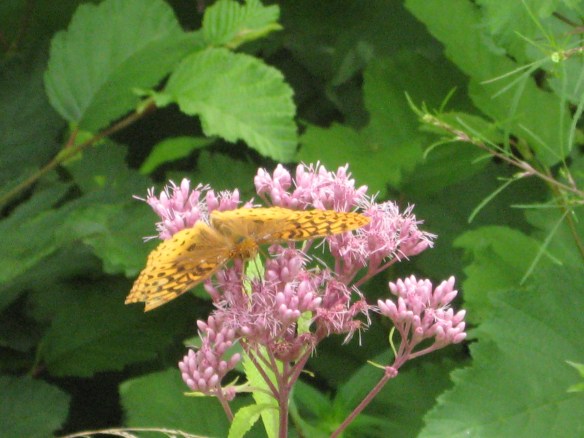
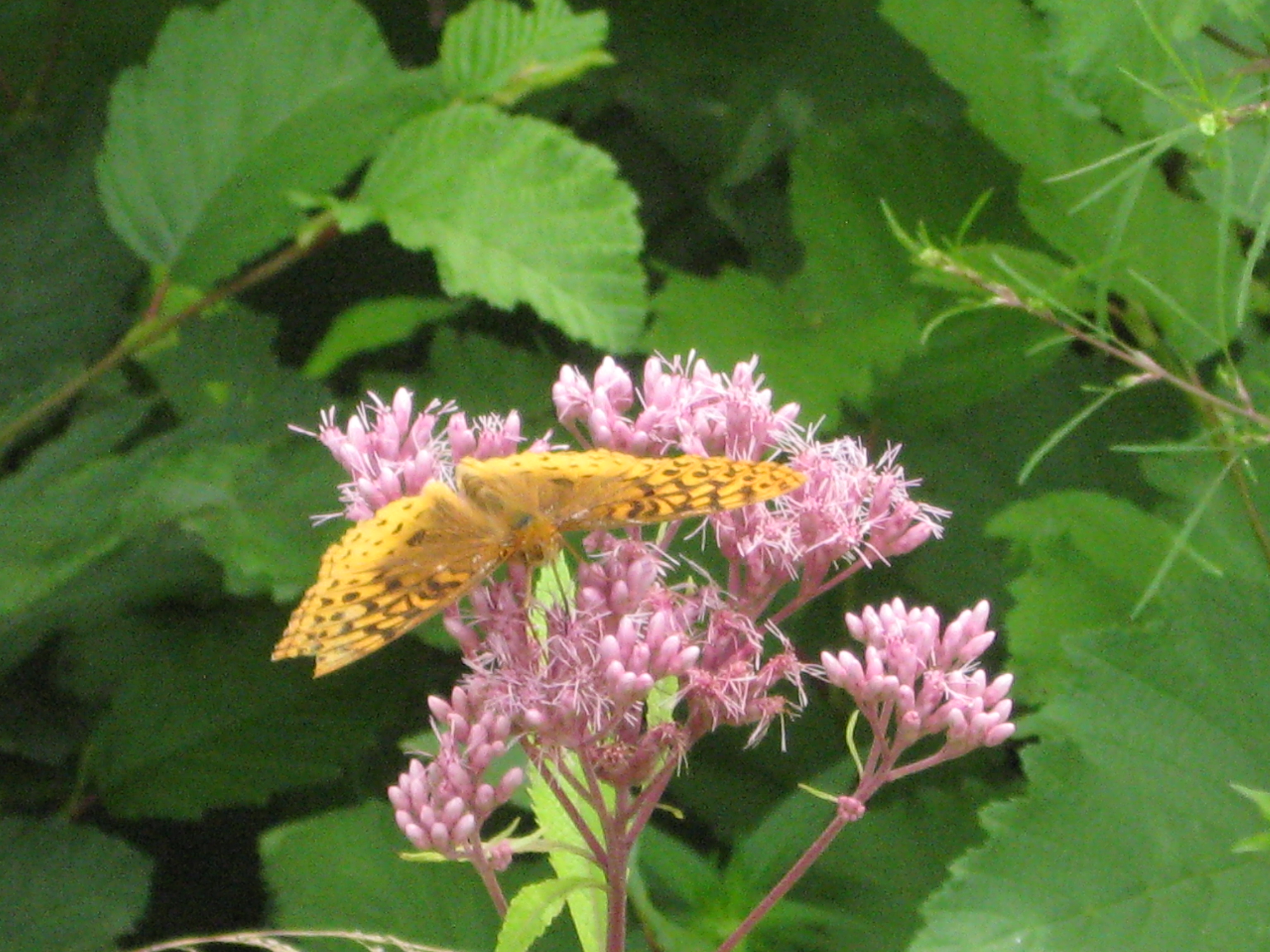
Joe Pye Weed, with a non-lethal creature.

Earlier we’d passed Joe Pye Weed, visited by a non-lethal creature.

We arrived at the fated spot much more quickly than we thought we would; fear definitely distorts your sense of time. Involved in looking for the prints again, we walked along the path identifying deer and raccoon in the thick mud, and others, including the horse’s hooves we’d seen all over Partridge Run.

Then there they were–round, small, but bear’s prints, definitely not dog, definitely not people or coyote…click-click the camera went. I neglected to check the woods every second or two. In fact, the more bear-free minutes that passed, the less afraid I felt. We finished and hurried back to the car, the distance even shorter this time.

On our final steps:
A granola bar, Mr. Bear, I think she’s got one of THOSE still.

In the car, we giggled in relief. I had faced my fear AND gotten the pictures.

***

I am glad I had a hiking partner who was willing to go back, even if she was (verbally anyway) also willing to throw me to the omnivores. Glad I got to enjoy my peach pie, and the fairy tale lesson did not involve being swallowed and cut out again, or some outside hero saving me. Glad I’ve learned to not live without fear but to feel it and choose my action.

Having a wicked-funny friend along sure helps.

***

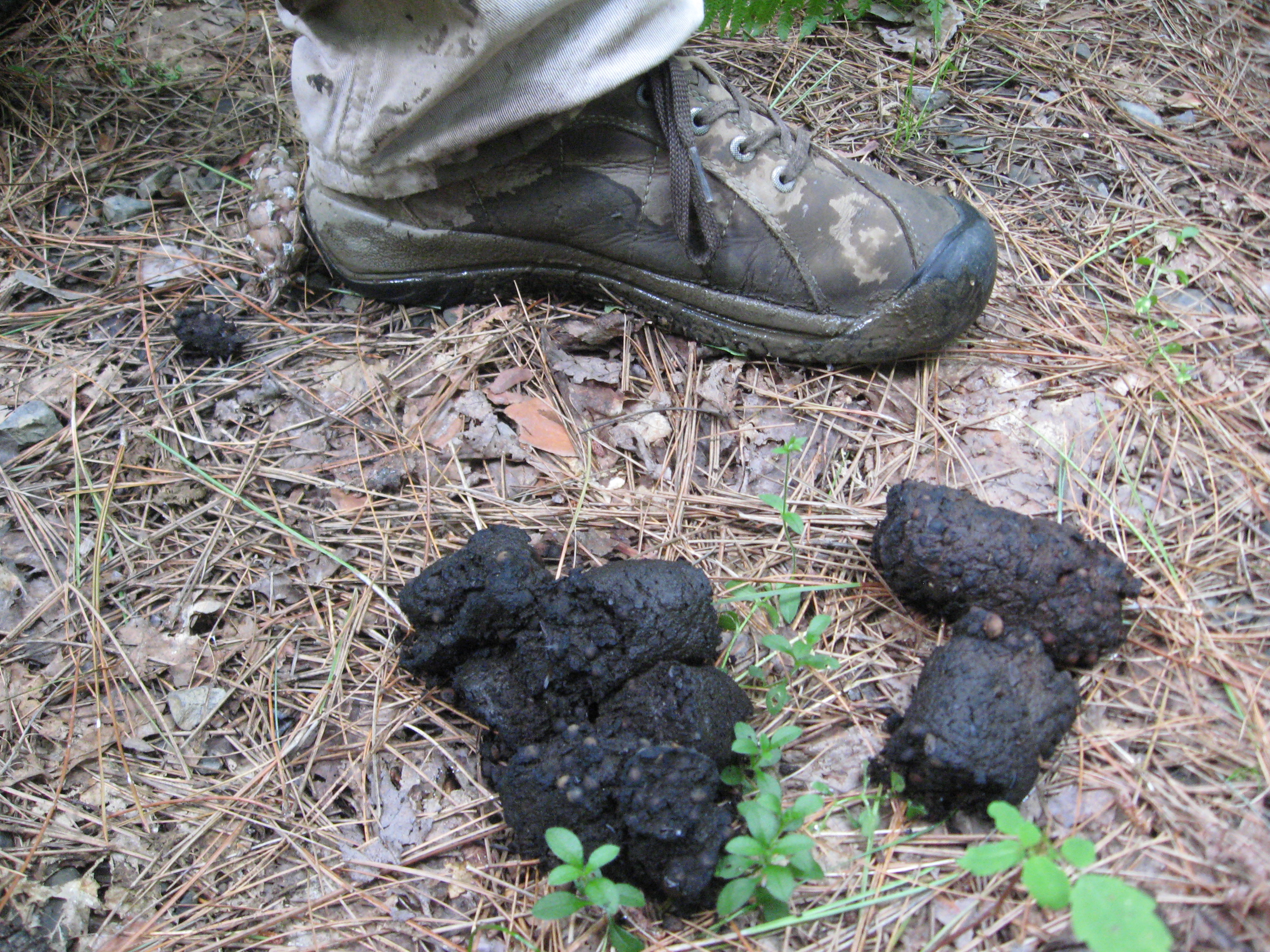
Postscript: At home I analyzed the photos. The ground was so wet and gravelly, it was hard to capture the details of the prints that were visible three-dimensionally, in person. You can’t see where we saw that nails and claws had dug in, versus just some other animal’s pads displacing the mud. But the dung was delightfully clear.
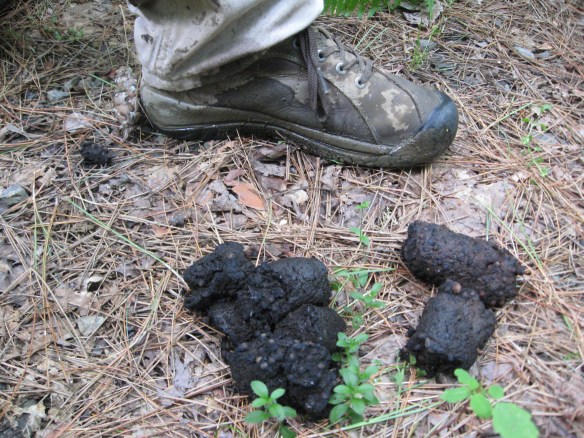
Yup, there it is.

Yup, there it is. The pile of scat was not large, hence the bear wasn’t either. Which is just what the size of the prints indicated as well.

Chanting? Really? Yes.

Oscillations of water wash over fall leaves, at Partridge Run, Berne NY.

Oscillation of water, like sound, washes over fall leaves, at Partridge Run, Berne NY.

Most mornings, I chant.

I have always been told I couldn’t sing well; whichever octave sits next to me is where I jump, and I waver when unsure if another note might be closer.  I’ll sing snippets with my CD player or part of a hymn I’ve practiced a hundred times, but only when I am fairly confident I will land correctly.

Still, I wibble and wobble.

But at yoga school, chant began our day. I had to open my mouth and make sound come out. On-target or out-of-key, it didn’t matter; first thing, we intoned “the resonance of the universe,” Om, followed by three Sanskrit stanzas of the Student-Teacher Mantra.

Almost sixty of us perched sit-bones on little black cushions while out the window, sunrise pinked the eastern sky.  The mantra song felt strange to many and made them itch in discomfort and wiggle like little kids.   Mountain fog dissipated into the evergreens while our eyes remained closed, or followed the lines on a large-print poster at the front.  Over twelve days the chant became more familiar.

IMG_4024

Clouded Kripalu morning over the mountain.

During the break between sessions, I committed to continue, using a grainy digital video I’d recorded at Kripalu.

At that point, I needed to be led.

By the third stanza, usually my throat hurt.  I tried again every daybreak to coax energy, with a vocalization some mornings tentative and froggy, other times expansively bouncing off the yoga room walls. Breath slowed and deepened out of necessity, and warmed my throat. Warmed my thoughts toward myself.

This was not just a tune.

Then came even deeper breath and movement, heat, circulation and all the good invited onto my mat with those sensations. Finally, my nauseated frustration flirted with comfort. I recognized unwanted thoughts and let them float away.

When we returned to Kripalu, I heard my morning voice steady and confident.

Tibetan singing bowl with symbol of wisdom eyes.

Tibetan singing bowl with symbol of wisdom eyes.

Now out of school, why do I do it?

One afternoon I sat in a kitchen that reeked of the detritus of cooking, home early because my therapist forgot my appointment–what deep things does THAT say? I asked myself melodramatically. Basil stems and onion ends needed to be taken to the trash, cabbage bits and tea leaves laid sodden in the sink, crumbs sprinkled the table and floor.

Earlier I’d stopped at the used book store and found two 25 cent paperbacks for the lake-vacation planned with my best friend.

But at my table I acknowledged it was a vacation she and I would have to put off–because her brother is sick, so she will instead drive five hours back and forth to him a couple days a week, and then to doctors and hospitals in search of diagnosis, prognosis, the plan, whatever-that-plan-might-be, however long it might take. Because of love.

How can I make my life like a vacation without a trip? Give yourself permission, my therapist might say, like the night before, to stay up and crush the basil into pesto, to cut the watermelon and freeze the grapes for hot afternoon snacking, to wash the lettuce–but also to toss the sprouting sweet potato, feel the sticky floor under my feet, acknowledge I ate maybe one too many pieces of the blueberry buckle baked in the beautiful dark. Feel it all.

Blueberry buckle: crunchy top, tender crumb.

Blueberry buckle: crunchy top, tender crumb.

I had given the therapist some blueberry buckle as we laughed over the scheduling error. I thought, I would send some to my best friend if I could fly it there. In the midst of her pain, she’d mailed me a royal blue Pashmina shawl; the card read: Wrap yourself in this hug from me.

I want to take her to the lake we’d planned to visit, to hear the loons and go on long photo safaris in search of wild flowers and angles of light, to huff the thickly oxygenated Canadian forest air.  Drape myself like a scarf around her sad, sad shoulders. Feed her blueberry buckle and sip Chambord into the evening, watch the hummingbirds and fog dance in over the beach.

That’s why I chant. I chant to create space, to feel distress and delight. I chant, holding my best friend close, and her gravely ill brother. I chant and remember my friend J who died a year ago this month. I chant love gliding out of me for all of my existence.

I chant into the lakes and ponds and rivers and creeks, up the farmland and mountains, through the cumulous and wispy and mackerel skies. I chant into my cells, lungs, intestines, skin and fat and muscle. Into my toes and fingers. Through my navel: center of gravity, center of balance, center of self. Then out again and out again. Stretch, release.  Expand, contract.

Time passes and I am inhaling, vibrating, exhaling, feeling.

Time passes and I am in my breath in my body so time is inconsequential.

Chanting beckons me back to the mat and back to myself.

Chanting opens me with sound.

So most mornings, I chant.

Electric zing of fall color; energy courses through.

The visual zing! of fall; a path of green revealed by seasonal red.

Sighing into spring, and school

Golden now, not grainy-gray, the quality and angle of morning light has definitely shifted in the kitchen. Come 5:30 a.m., I hear returning songbirds chipping and chirping outside my urban bedroom. It is spring again–and still–despite the almost-blinding gusts of snow that assaulted my windshield after dark the other night.

Winter sunrise over the hill

Winter sunrise over the hill

I think about going back to school and sigh, just a little. This will be a challenge. Normally spring is the time students think about freedom! if not the short burst of spring break, then the long open opportunities of summer. Instead, I am picking up books, “screwing on my thinking cap,” as some obnoxious teacher once pantomimed. Ouch.

I am also intrigued, excited, curious. It’s like sleep-away camp–not that I ever attended, just read descriptions in books and heard about it from friends. Supposed to be new kids to meet, a whole lake to swim in, lanyards to twist and knit. In my case, other interesting grownups, a lake to walk around (still too cold for swimming), forest paths and a labyrinth too and a healthy cafeteria: physical and mental growth to be had everywhere.

My problem is that very persistent A+ student who hangs on the edge of my mind, like a bully taunting from the field beyond the playground, Yeah, just try stepping over here. You’ll see what happens! Loser!

She/he interjects comments as I read my Kripalu Yoga textbook. Sometimes I am pulled in by the resonating philosophy, so I forget that voice; sometimes I sigh yet again, frustrated by my more recent midlife difficulties with memorization. Perhaps because I am creating new neural pathways along with the information, undoing old patterns of self-deprecating reaction, my mind has rebelled: This is too hard! I’m not cooperating!

I go into the yoga room and look at the book, the diagrams. Deep breath. I speak the pose names as I stretch out and position myself–

–on the belly, pelvis firmly anchored into the earth, arms and legs lifting up and behind me: I whisper “Nav-asana,” and think Naval, like a boat on the water, floating with waves of breath….

Kneeling, then flowing back over knees-wide-apart, arms reaching forward on the floor, Garbh-asana, Child’s Pose–I am garbed in the freedom and openness of the child-mind and child-body, I take what rest I need, when I need it.

Bala-kik-asana, Crane: a one-legged pose of balance, arms hovering, the staccato Ks remind me of the stick-legs of a bird in water.

Like a boat--or a dock--water softly lapping, the feel of Navasana

Like a boat, or a dock:  water softly lapping, the feel of Navasana

Ah, there, that’s a reason you do yoga. Space for creativity, not pushing and grunting along, not cramming yourself into a place that doesn’t fit. By its very definition, yoga is about expansiveness, room for yourself, who you are, at that moment.

Unwinding my body in Spinal Twist (Matsyendr-asanahow to remember THAT one?) I exhale and think: Snow flies yet spring comes. I can’t remember things, I can remember things.  Just because I suffered last time I learned, doesn’t mean I have to again. In fact, the intention is to do it differently now.

Welcoming carving on the Emma Willard School  "Alumnae Chapel"

Welcoming carved face on the Emma Willard School “Alumnae Chapel”

I enjoyed a marvelous Easter/post-Spring Equinox holiday with a colleague of mine. We tromped through cemeteries overlooking the Poestenkill and around the Emma Willard School campus, deserted on a Sunday; snacked on huge pink slices of watermelon radish with cups of hot tea and maple sugar; worked on individual writing projects while the local whole chicken stuffed with crumbled sausage, butternut squash and kale baked in her oven.

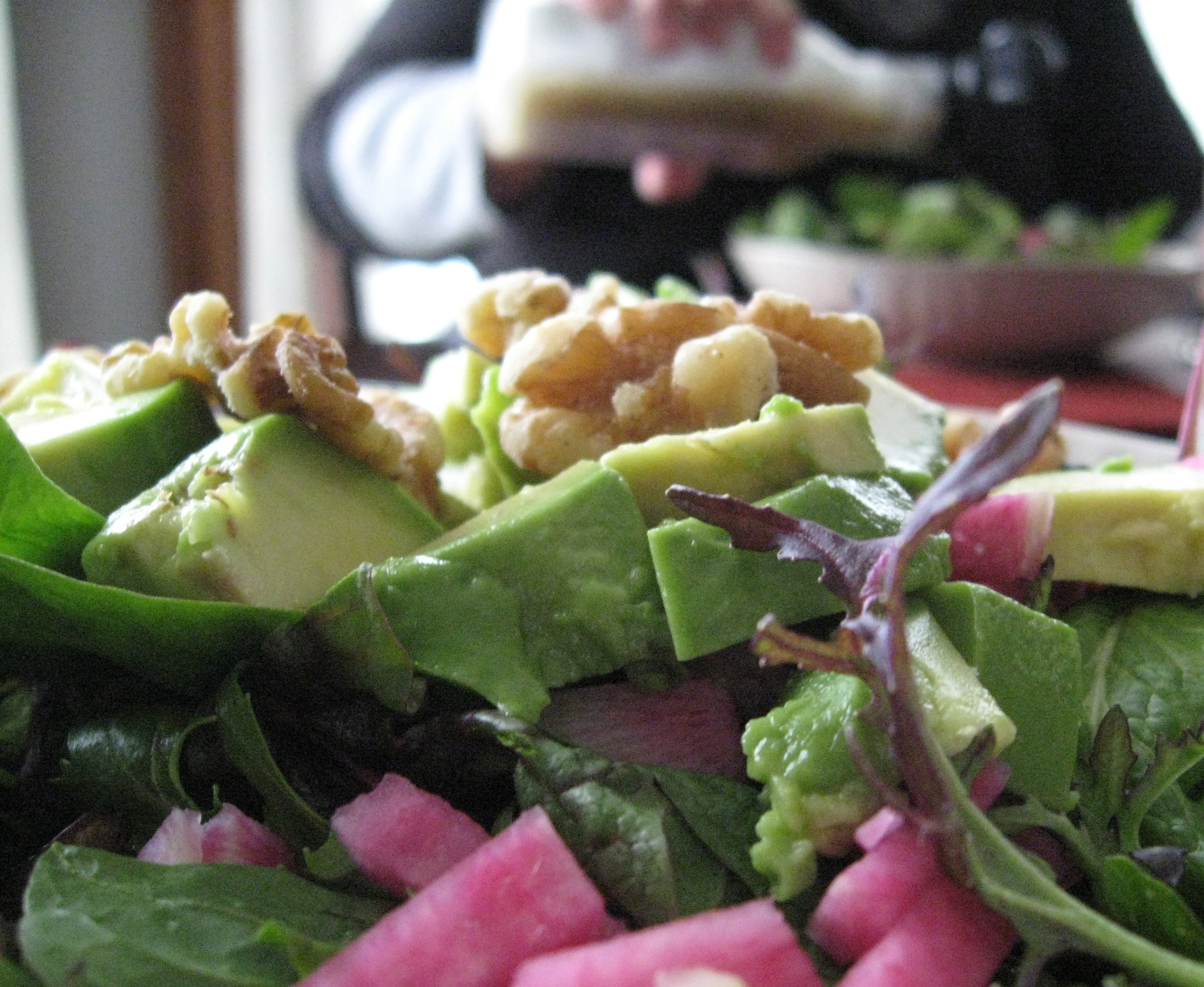
We took a first-course interlude of salad: more radish, avocado, walnut, mesclun and vinaigrette.

Spring salad to tease the appetite

Spring salad to tease the appetite

I sliced sweet potatoes into fries. Her least favorite chore for the day, the knife-work was a job that didn’t feel like drudgery to me at all; I hummed as I chopped along.  That’s something I am watching for in my future earning-a-living, ways of spending my hours that I so enjoy they don’t feel like “work.”

My companion rubbed coconut oil, cinnamon and a little rosemary on the wedges before oven-roasting them. As we tapped our keyboards in the living room, the smells of dinner intermittently tickled our noses and then slammed us lusciously when we re-entered the kitchen in search of more tea.

When all was ready, we ate until satisfied and no more, heaving happy groans nonetheless, and deliberately leaving some food on the plate to wrap up for later.  Sips of tart cherry juice with seltzer served as dessert, accompanied by more writing time.

Paleo stuffing and sweet potato fries

Paleo stuffing and sweet potato fries

Ahhh, we sighed, a holiday that wasn’t (as is typical) about overstuffing our stomachs or our schedule. As the day meandered, so did we; we took seriously our choices but made them only as we went along–Want to walk more? Turn this way or that? Whoops, the chicken isn’t done; oh, I see why it needs more time, ok, we’ll write for twenty more minutes.

She’s a future yoga teacher too, and we’re both applying the lessons on the mat to daily life: sometimes grappling, sometimes serene, knowing serene-plus-grappling is actually desirable.

Yes, I told her, I joke a lot about breaking into a sweat learning to love my life.

But ease is what I aspire to:  ease within challenges, like strength and lightness in a yoga pose, grounded in the earth and yet buoyant, willing to move and respond to the wind, and not let go of connection to who I am in my core.

False starts, shifts in weather, don’t indicate that spring won’t come. How days-off were acknowledged in the past doesn’t define how I celebrate them now.   I will allow myself to be not-so-good in school and not worry.

All of it will be delicious.  Especially the more I stand in each moment, Right Now, swaying and trembling perhaps, but over and over returning to curiosity, determination tempered with compassion, and gentleness toward myself.

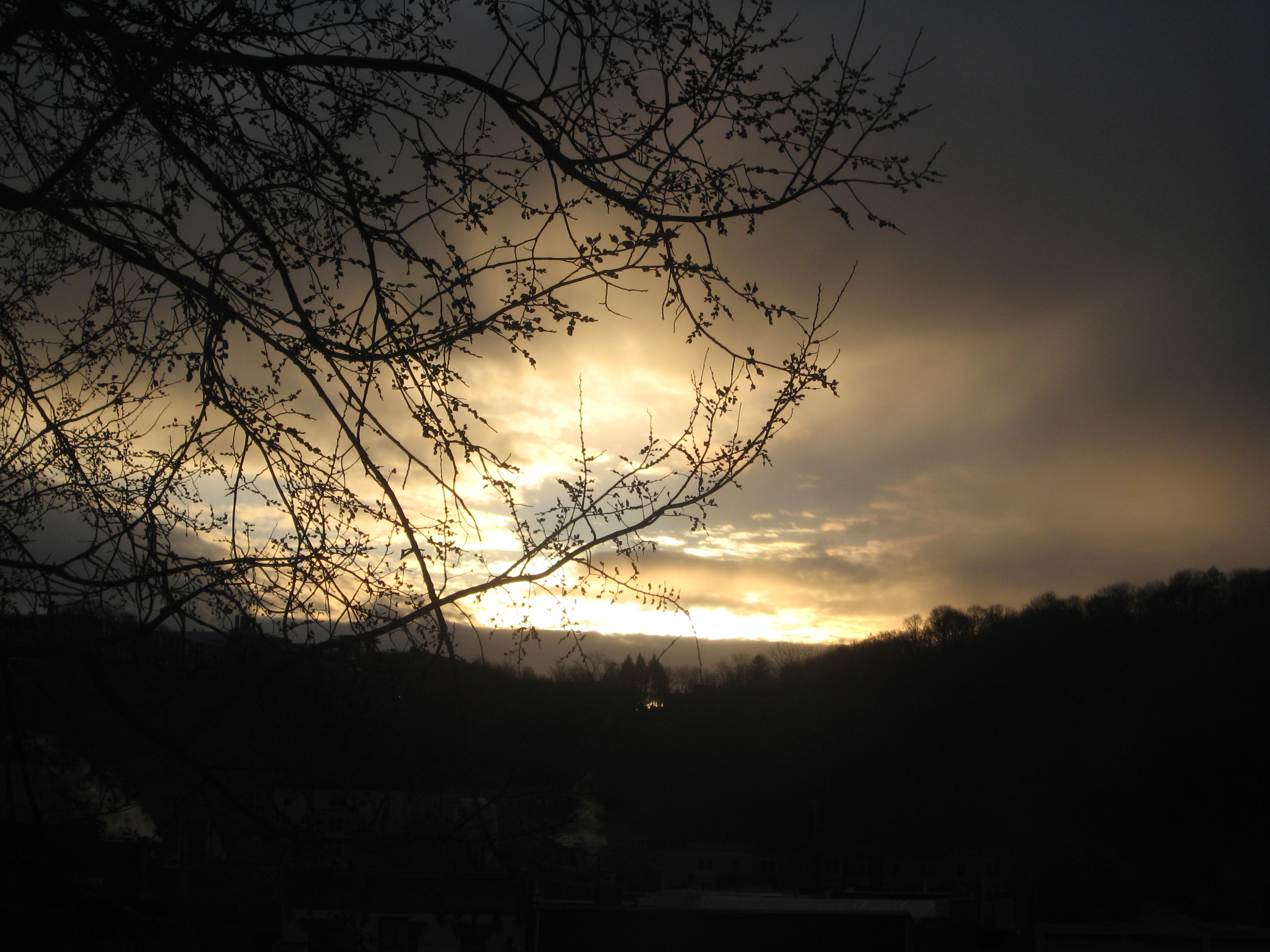
Warm spring sunrise

Warm spring sunrise behind budding tree

Washing Dishes

Today’s view from the kitchen window

There the pile sits in the morning kitchen: water glasses with lip marks and fingerprints; small plates smeared with food, accompanying utensils splayed over them; tea cups and travel mugs with rings of dried milk and sugar; plastic leftover containers, greasy lids akimbo.

Usually it doesn’t feel like an onerous chore. But a not-unexpected sadness has come to nest in my house this fall.

I know that when you lose someone, like I’ve lost J, you revisit your other deaths, especially those you have not finished mourning. You acknowledge and examine the loss of friends, places, homes, relationships, belongings, patterns of behavior, certainty.

That is the work I am doing.

Part of the floundering has included a scary disinclination to write, choosing entertainment over introspection, an old habit I thought I was done with. I haven’t felt like cooking. Or even cleaning up after the take-out.

But then I remember J half-joking, half-begging: With these lungs, I may not be able to vacuum or dust, but I can still stand here and wash a few dishes. Just let me do them!

A little bleary-eyed, still in slippers and ‘jammies, I set up the water boiler on the counter, fill the empty ice cube trays and put away the clean dishes washed a week ago.

Another voice from the dead, Great-Aunt Helen, whose legs were heavy and painful, fingers mangled by arthritis: This is my house and don’t you touch those dishes!

But Aunt Helen, we helped make this mess, and you must be tired after baking cookies and Mahogany Cake–and cooking brisket and dirty rice. It will be so much easier for us to clean up.

We’all are gonna sit in the screen room, have some Dr. Pepper, and listen to the night sounds. Leave the dishes ‘til morning! When I wash ‘em up tomorrow, I can take as long as I want and relive all the arguments, and the jokes, and the silliness. I know you mean well, but I want to remember the good time we had while dirtying these very dishes.  No arguments; it’s settled.

So today at the sink I pay monk-like attention to details: the sound of the tea water moving toward a boil, then the smooth matte surface of robin’s egg and gold stoneware plates in the sink, essential oil of lavender soap bubbling my hands.

I remember the phone conversation with a fellow writer while I drank the Earl Gray Cream out of this Shakespeare Quotes mug, and commiseration with an out-of-work friend accompanied by Russian Caravan in that blue flowered cup.

Having reached temperature, the water in the boiler is poured over loose Truffle black tea, bits of dried coconut and chocolate chips visible. Back at the sink while it steeps, I revisit Lad Nar over garden green beans here, the half sandwich left from a writing session at Professor Java’s there, and an apple-farm Honeycrisp purchased in September after a sunny bike ride along the Mohawk River, sliced carefully onto a blackberry colored plate. Washing, rinsing. Washing, rinsing.

October ivy

Outside the window, ivy reddens on my building, the green ivy opposite just barely blushing yet. Rain pelts the cars rushing by and students grind wet gravel underfoot as they hurry to class. Up the hill, willows and maples and birches and oaks are all changing color at different speeds.

I scrub to get every bit of scrud off a pot, rinse it thoroughly in hot water, then place all the dishes one by one on the gas stove so as to be perfectly dried by the heat of the pilot lights. When ready, there will be the satisfaction of putting each plate, each mug, in its own place once again.

After the fixtures and counter are wiped down and dry, I pour a cup of tea and finally, finally make the frittata I planned a week ago.

It consists of: freezer spinach overdue for use, a teeny green pepper from my garden (one of five whose existence completely surprised me two weeks ago), four ounces of muenster cheese, half a white onion, a teaspoon of salt, some crumbled dried sage from another friend’s garden, a pinch of nutmeg, six local eggs, a couple tablespoons of flour to thicken. Out of milk, haven’t gotten myself to the store, so I just steam all the veggies in the microwave, keep the liquid, and stir it all together with a tablespoon of butter chopped up.

I bake the sun-yellow concoction in a greased oval pan in my convection toaster oven at 375 for 15 minutes. With puffy browned edges, eaten off a pretty green plate, the frittata tastes of warm kitchens past and present, meals present and savory meals to come.

Tomorrow morning I will make tea and wash these dishes, too.  No arguments; it’s settled.

Grief and Green Beans

I harvested the last of my pole beans before J went into hospice. The beans are a bit of trouble, since they take forever to steam to softness, and thick strings seam each pod–hence the name “string” beans. A bag kept them fresh in the fridge while I travelled first to say goodbye to J and, two weeks later, to her memorial.

Late one evening after my second flight home, I cooked and cooked the green beans, drained and stuck them in the fridge for later processing.  A friend took me to wander in Vermont, to touch handmade dishes and pause at autumn leaves in the mist. And talk about J.

Home again, there they sit in the fridge, those green beans. De-stringing and freezing loom but I am too tired. I swim through the air as if it were thin syrup, every day or so surprised by forgetting and remembering suddenly, with a sharp inhale, that J is gone.

I don’t even want to open the container, afraid the beans will be moldy, but in a way hoping they will be, because I find myself unable to make decisions. Especially since, after the leaf peeping, the seven year old computer I’d been nursing along just up and died, Zap! screen gone to black. Finally I have to buy the new computer I’ve talked about and put off for months–the money’s in the bank but it will involve more thought, more study, change more change.

On the dead computer I had written three perfect paragraphs to open this week’s post, the only document not backed up to my external hard drive. Now I can’t remember the story. It certainly had nothing to do with string-beans.

I look in the fridge. Just a small bowl of beans, not quarts and quarts, but I hate to waste food, waste all the time planting seeds, watering through drought, harvesting, boiling–yet perhaps it is too late already; maybe the universe and time passing made the decision for me, just like the computer, just like J’s death, can’t put it off, have to face it, I’ve spent my time how I’ve spent it and here I am.

Ghosts of old surgical pain visit in the afternoon: the sore throat memory of intubation and a deep ache under the ribs. Front teeth throb, revealing I’ve been literally gnashing my teeth during sleep. On the yoga mat, tears come up, the ones held in during the expected talking about her death, the rearranging of schedule and inevitable too-soon return to regular life. I am swept along by daily chores and interactions, like currents pulling at me while I stand in a lake, when all I want is to float without effort, study the changing color of the sky and view fluttering fall leaves reflecting in the water’s surface.

We are always asking to be able to slow down and now I feel more stuck than blessed in my slowed-down-ness.

Serendipitously, my best friend comes to visit from out of state, and speaks that language of not-having-to-speak, of long history together. She drives me to the computer store.

I hear the strange notes my speech strikes, mind-on-grief, describing my work to the saleswoman:  The blog’s about living in the moment, has turned out mostly about gardening, gardening as metaphor for life, but lately it is about death; hearing how flat and dark that sounds, my best friend does what I usually do, elaborates for clarity–because a dear friend of hers died recently. The computer has to be special-ordered; I only complete the purchase because the best friend stands next to me.

After she leaves, I think of Thai food delivery but feel guilt over beans already cooked.

What would J have said?

Don’t worry….think of all the food you DID freeze, make into soup, share with others this summer.

We could order pizza; remember last winter when you taught me I could eat it for breakfast?

Have some more tea.  A new laptop, how exciting! Let me tell you a story about–

I toss the smelly green beans and order takeout. I stare at the auburn and gold out my window. I sit and cry over loss–unintended loss, and loss you can’t put off. I borrow a computer to write and post. 

I live in grief-time.

A vista to ponder, Bennington VT


Mind-Out-Of-Time: Writing, and Teapots

My teapot from J, tucked behind an electric kettle, another teapot, and a locally crafted mug,  on my early morning countertop.

I miss talking to J about my writing life.

This afternoon I will concentrate on writing, I’d say.  I’m deliberately ‘concentrating on,’ not ‘working on’–no more of the furrowed brow that ‘work on’ entails.

She’d laugh.  I used to have that furrowed brow, too; hell, look at my wrinkly forehead.  J would talk about the struggle to get to her drawing, even with new chalks and paints around her, how daily chores and her own busy mind pulled her away from something she’d never had time for, yet couldn’t quite get to, even now.  She’d encourage me to keep going, and I’d tell her more.

When I give myself over to writing, or create space for it, then I can relax and play. It’s what I call Mind-Out-Of-Time, what I sometimes think heaven is or would be: you are so involved in something that clock hands move unnoticed, you look up and the afternoon light is bending across your desk and you gasp–how long have I been here?

Mind-Out-Of-Time comes also when I choose to immerse myself in how life looks and feels, tastes, sounds and smells. It comes when I give myself permission to be right where I am, at that very moment, open to pleasure even in the midst of pain.

So I think of J, steeping tea in her beautiful cobalt blue teapot, when I came to visit six months ago. Napkins in hand, she danced oxygen tubing between pieces of furniture as I carried the prepared cups and cookies to the front room. We laughed about how, on our last big trip, she’d pulled her portable oxygenator, nicknamed ‘Fred’ after her father, all over the up-and-down hills of downtown Vancouver.  Fred sure got a workout, didn’t he? Took care of me just like Dad did.  We discussed once again her wish to die at home.  She asked after my teapot, a twin of hers, which she gave me when I moved away. Every time I make tea in it I think of you, I told her.

Two weeks ago, her caregivers still made English Breakfast in her blue teapot; she rested in the home hospital bed, I held the mug, she sipped sweet lukewarm liquid with a straw.  During the moments she was awake, she rolled her eyes sardonically, joking with only a few words about the little yellow curlers in her hair that looked like baby corn; I teased her back about how she finally got us all to wait on her hand and foot, and more seriously, how much we loved doing it.  As she drifted into medicated rest, she murmured about death, it will be pleasant; it will be pleasant. See you on the other side.

After the memorial service last weekend, I wrapped up the cobalt blue teapot in crinkly paper, to deliver it safely to her chaplain, someone who’d shared tea with her every Wednesday for many years, someone whom I suspect also understood mind-out-of-time with her.  I took one of her mugs and packaged one for yet another friend.

This morning, kitchen lights reflect on the curve of my round teapot as rain drips down the apartment windows.  Cars splash black puddles up into the air outside.  J’s goldenrod colored, cartoon-cat covered mug, full of toffee-chocolate-hazelnut tea, sits beside my keyboard.

Guess what.  I’m still talking to J about my writing life.

Living in the Moment: Friendship

Fire tower at Goodnow Mountain

My garden is end-of-season-neglected, but not because all the vegetables have been harvested.

I am not sure what I will find when I return to it, much like I was not sure what I would find when I sat last week in the front room of my friend J, who entered hospice three weeks ago.

Before that visit, she called me.

Hi, it’s Me. I’m really, really sick you know.

J, my dear–sick in the mind or sick in the body? Or sicker in both? Tee hee! Is there a prosecutable offense involved? Or lots of juicy drama?–

–Actually, the pulmonary fibrosis has progressed. A lot.

Oh.  Well, you and I knew that would happen eventually.

At 74, I’m not afraid of dying. I just don’t want to be intubated again.  I don’t want to be poked or prodded or in pain.

Your DNR orders and advance directives—we’ve made sure that won’t happen.

Oh, enough about me! What have you been up to?

J, I hiked a little mountain this weekend, Goodnow, near Santanoni. It took about three hours; the trail was full of tree roots and rocks.  And then I went up the fire tower.

I don’t think I could do it, climb that mountain.

Not with your oxygen tank, no. But perhaps we could get one of those things you sit on, a litter, with the four guys, to carry you up.

Only if they are hunky.

Ok. And fancy tassels will hang off this, waddya call it, palanquin, that’s it! With soft pillows for you to recline on.

And a scarf! I want to wear a white scarf, flowing in the breeze. But wait, what about that dancer, who got strangled by her scarf?  What was her name?

Isadora Duncan! Hmm. I will plan for a fifth guy, who will be there just to make sure the scarf swirls around artistically but doesn’t choke you.

How was it, the mountain?

You could see peaks all around for 360 degrees. The Adirondack lakes below were so cold and clear and blue. My knees were shaking while I climbed and then I was so scared of the heights I was growling like a wild animal to keep myself moving on the stairs! Hanging off the metal fire tower, that was perched on the rock, over those fall colored trees, up on the mountaintop–I was on the edge of the world.

Thanks for taking me there with you. But I’m going to lie down now.

Well, all right….I miss you. I love you.

I love and miss you too.

J, do you want me to come out to see you again?

Yes, please!….It’s been really good talking to you, but my memory is so bad, what if I forget what we said?

Well, are you enjoying yourself right now?

My side hurts from laughing.

All that matters is that we are talking. If you forget, I will remind you what we said. Or if I forget, we’ll do it all over again next time, and just laugh some more.  Wow–I guess that’s what they mean by living in the moment.  See you Tuesday.

Tuesday came, and I went for a week and lived in that space some call Kairos-Time, Meditation-Time, outside of our normal lives, in a place that is exhausting and sad, long and short.  I was glad to be there to say good-bye.

For now, J is at home, and comfortable, resting in her palanquin of quilts. Her bearers,  the many friends and family, come by to visit, waiting in her front room for the moments here and there when she is awake, to share their own memories of the hard climb, glimpses of silk scarves and long views of lakes.

***

While performing final blog-edits, I received word J passed away early this Friday morning.

So my dear friend has finished her own end-of-season harvest.  It may have looked spare and imperfect to outsiders–that’s just the messy way fall in the garden is–but whatever was there had matured and grown somehow perfectly ripe, sweetened even, by the inevitable change of season. I’m grateful that, for eighteen years, we got to hang out together in this part of the garden.

View from Goodnow Mountain fire tower